

Best GPS Tracker for Delivery Riders in Qatar, UAE & Saudi Arabia
Types of GPS Trackers Explained: Which One Do You Actually Need?
Vehicle, personal, asset, and pet trackers all use the same core technology — but they're built for very different jobs. Here's how to tell them apart.
"GPS tracker" gets used as a catch-all term for a surprisingly wide range of devices, from a hardwired unit hidden inside a car's dashboard to a tiny tag clipped onto a pet's collar. They all rely on the same underlying GPS and cellular technology, but the hardware, battery life, and features differ enormously depending on what's actually being tracked. This guide breaks down the main categories so you can figure out exactly which type fits your situation.
📦 The Four Main Categories of GPS Trackers
Vehicle Trackers
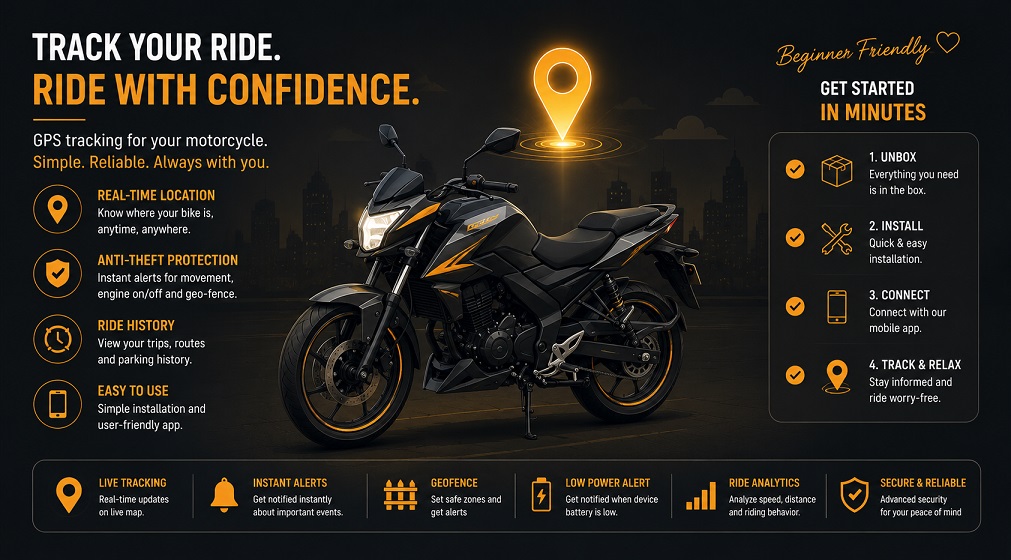
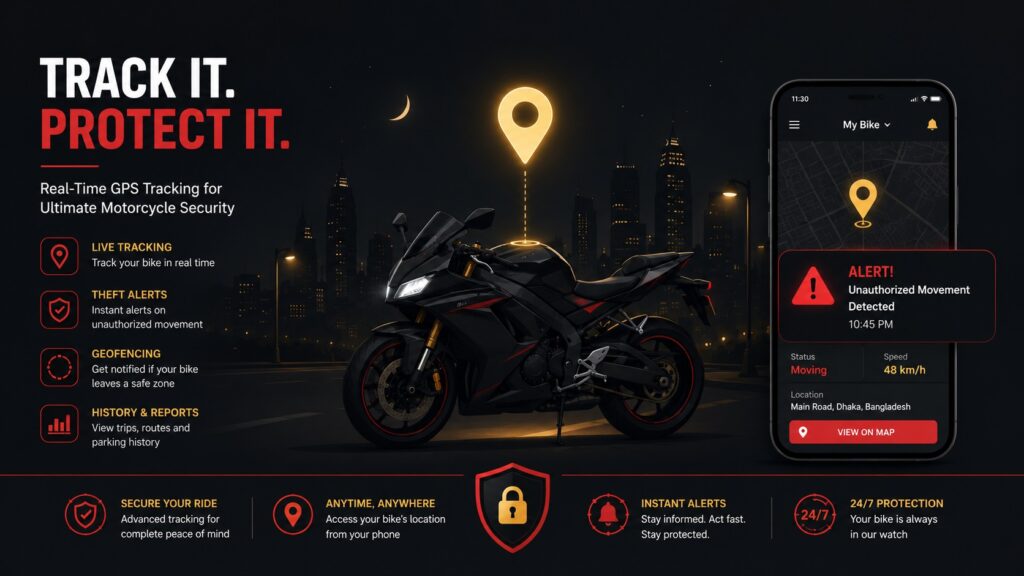
Wired or plug-and-play devices built for cars, motorcycles, and fleets — continuous power, geofencing, and often engine cut-off support.
Personal Trackers
Small, portable devices designed to be carried by a person — often with an SOS button, aimed at safety for children, elderly individuals, or lone workers.
Asset Trackers
Rugged, long-battery-life devices for tracking equipment, containers, trailers, or valuable cargo that isn't a vehicle itself.
Pet Trackers
Lightweight, collar-mountable devices with a compact form factor, often combining GPS with short-range Bluetooth for close-range tracking.
🚗 Vehicle Trackers in Detail
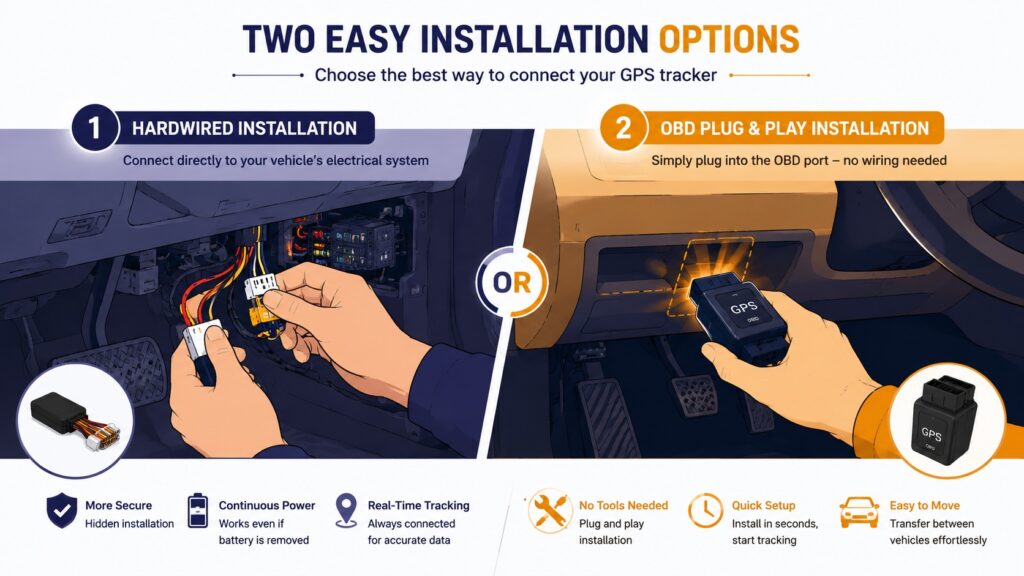
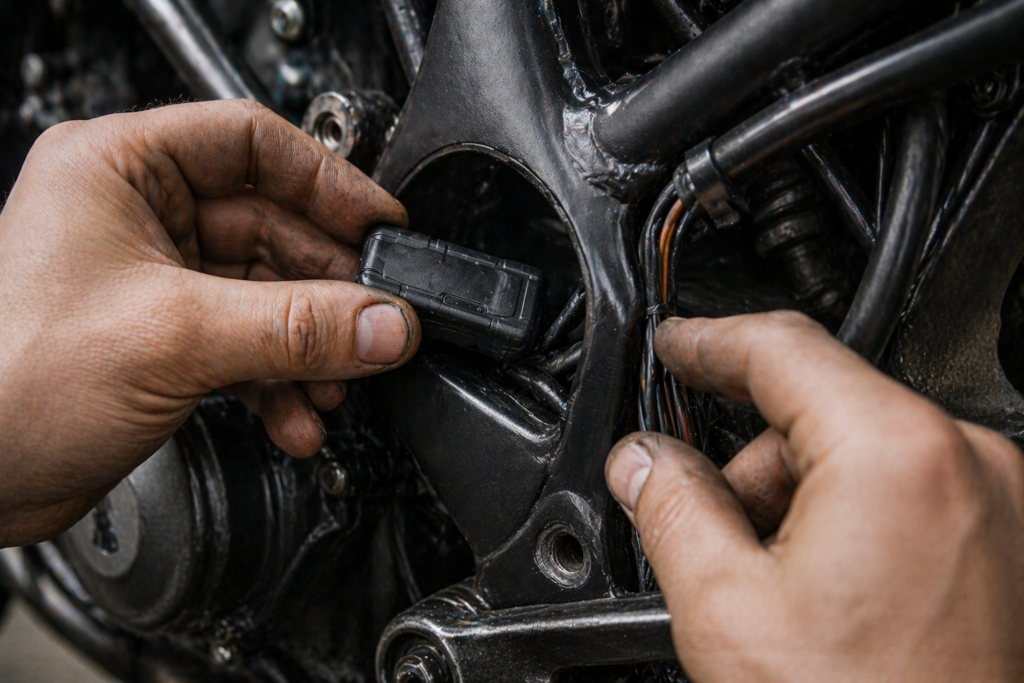
This is the category most people think of first, and it splits further into wired and battery-powered (plug-and-play) subtypes. Wired trackers connect directly to a vehicle's electrical system for continuous power and support advanced features like remote engine immobilization, making them the standard choice for anti-theft protection and fleet management. Plug-and-play units connect via the OBD-II port or run on internal batteries, trading some power reliability for much simpler self-installation — a good fit for rental cars, temporary use, or anyone who wants to avoid a workshop visit.
👤 Personal Trackers in Detail
Personal trackers are built to be carried, not installed — small enough to fit in a pocket, bag, or worn as a compact wearable. They typically prioritize an SOS emergency button, two-way calling in some models, and simplified interfaces designed for children or elderly users who may not be comfortable with a complex app. Battery life tends to be shorter than vehicle trackers since the device is much smaller, often requiring daily or every-few-days charging depending on usage.
📦 Asset Trackers in Detail
Asset trackers solve a different problem entirely: monitoring something that doesn't have its own power source or regular use pattern, like a shipping container, construction equipment, trailer, or high-value cargo pallet. These devices are built for extended standalone battery life — sometimes months or even years between charges — since they can't be wired into anything and may sit unused for long stretches between active tracking periods.
🐾 Pet Trackers in Detail
Pet trackers are among the smallest and most specialized devices in this category, designed to be lightweight enough for a collar without bothering the animal. Many combine GPS for longer-range outdoor tracking with Bluetooth or similar short-range technology for more precise close-quarters location — useful since GPS alone can struggle with the fine-grained accuracy needed to find a pet hiding nearby in a garden or park.
📊 Side-by-Side Comparison
| Type | Typical Battery Life | Key Feature | Best Use Case |
|---|---|---|---|
| Vehicle (Wired) | Continuous — no charging needed | Engine cut-off, geofencing | Cars, fleets, anti-theft |
| Vehicle (Plug-and-Play) | Days to weeks per charge | Easy self-install | Rentals, temporary use |
| Personal | 1–5 days typically | SOS button, portability | Children, elderly, lone workers |
| Asset | Months to years | Long-term standalone monitoring | Containers, equipment, cargo |
| Pet | Days per charge, compact size | GPS + short-range precision | Dogs, cats, escape-prone pets |
🛠️ How to Choose Within a Category
📡 How GPS Trackers Actually Get a Location
Regardless of category, most modern trackers combine two separate technologies to determine and report location. GPS (or GNSS more broadly) uses signals from satellites to calculate the device's position, working best with a relatively clear view of the sky. Cellular connectivity then takes that position and transmits it to a server, which is what allows you to see the location on a map through an app rather than needing to be physically near the device itself.
This combination explains both the strengths and limitations shared across categories. GPS accuracy can degrade indoors, underground, or in dense urban areas with tall buildings blocking satellite signals, which is why some devices — particularly pet trackers working at close range — supplement GPS with additional technologies like Bluetooth or Wi-Fi positioning for better accuracy in exactly the conditions where pure GPS struggles most.
❓ Frequently Asked Questions
Can one device work for multiple categories, like both vehicle and asset tracking?
Some devices are flexible enough to serve adjacent use cases — for example, a rugged battery-powered vehicle tracker could reasonably double as an asset tracker for equipment or trailers. However, devices optimized specifically for one category, like a lightweight pet tracker or a wired vehicle unit, generally don't translate well to a completely different use case due to differences in size, power source, and durability requirements.
Do all GPS trackers require a monthly subscription?
Nearly all trackers that provide real-time location through an app require an ongoing subscription to cover the cellular data connection and server hosting that make live tracking possible. A GPS chip alone can determine location without a subscription, but getting that location to your phone in real time depends on the connected service, which is why the subscription cost is a standard and unavoidable part of GPS tracking generally, regardless of category.
Which category has the best accuracy?
Accuracy in good GPS conditions is fairly similar across categories, since they're all built on the same underlying satellite technology. The more meaningful accuracy differences show up in challenging conditions — indoors, underground, or in dense urban canyons — where devices with supplementary positioning technology, like some pet and personal trackers, tend to perform better at close range than GPS alone would manage.
✅ Final Thoughts
Every GPS tracker shares the same core idea — combining satellite positioning with cellular connectivity to report a location — but the differences in battery life, form factor, and features between vehicle, personal, asset, and pet trackers are significant enough that choosing the wrong category leads to real frustration. Start by clearly identifying what you're actually trying to track, match that to the category built for the job, and the specific device choice within that category becomes a much more straightforward decision.
🔍 Find the Right Tracker for Your Needs
Browse our full range of vehicle, personal, and asset GPS trackers, built for real-world use across every category above.