


GPS Asset Tracking for Construction Equipment in Saudi Arabia & UAE
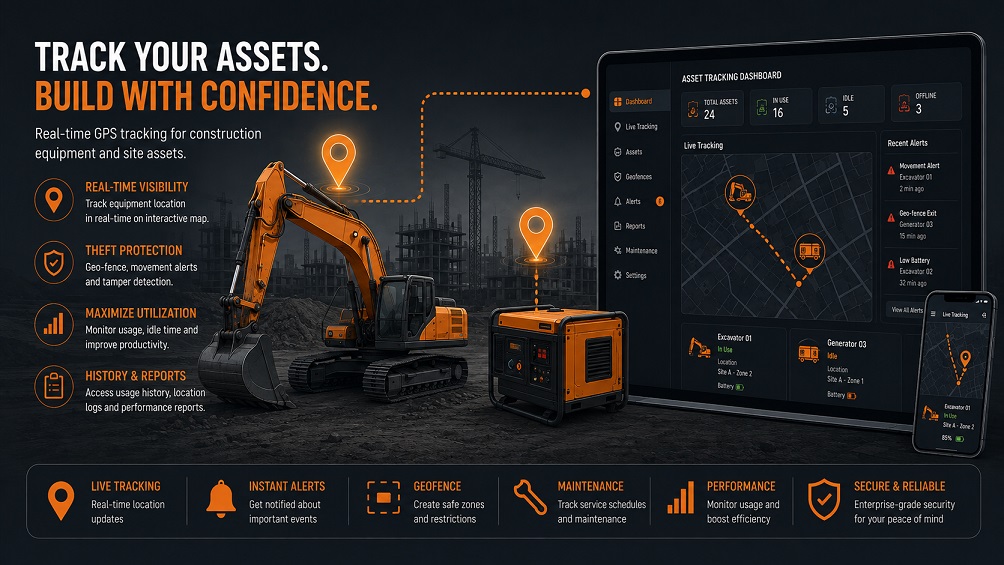
GPS Asset Tracking for Construction Equipment
With megaprojects reshaping Saudi Arabia and the UAE, heavy equipment fleets face growing theft risk and utilization challenges — here's how GPS tracking addresses both.
Saudi Arabia and the UAE are home to some of the world's largest active construction programs, from giant infrastructure developments to sprawling residential and commercial projects. This scale brings genuine equipment management challenges: expensive machinery spread across multiple sites, extended idle periods between active use, and a real theft risk given how portable and resellable heavy equipment components can be. GPS asset tracking addresses both the security and operational sides of this challenge.
🏗️ Why Construction Equipment Needs Specialized Tracking
Multi-Site Operations
Equipment frequently moves between job sites, making manual location tracking impractical at scale.
Extended Idle Time
Equipment often sits unused for weeks between projects, unlike daily-use vehicles.
High Individual Value
Heavy equipment represents substantial capital investment, making both theft and misuse costly.
🔑 Core Features for Equipment Asset Tracking
📊 Vehicle Tracking vs Equipment Asset Tracking
| Factor | Standard Vehicle Tracker | Construction Equipment Tracker |
|---|---|---|
| Power Source | Continuous vehicle electrical system | Standalone battery, often solar-assisted |
| Battery Duration | Days between charges | Months, given irregular equipment use |
| Durability Requirements | Standard automotive-grade | Rugged, dust and vibration resistant |
| Reporting Focus | Location, speed, driving behavior | Location, utilization, engine hours |
| Installation | Wired or plug-and-play | Often magnetic or bolt-on mounting |
🛡️ Theft Prevention for Heavy Equipment
Construction equipment theft often follows a different pattern than vehicle theft — smaller, high-value components like generators, compressors, and hand-portable tools frequently disappear from job sites during off-hours, while larger machinery theft, though less frequent, represents a much larger individual loss. Both scenarios benefit from tracking, though the specific approach differs somewhat by equipment type and value.
For larger machinery, real-time movement alerts combined with site geofencing catch unauthorized relocation quickly, often before equipment leaves the immediate area. For smaller, more portable equipment, compact asset trackers designed specifically for concealment within the equipment housing provide theft deterrence that's harder for opportunistic theft to defeat compared to equipment with no tracking at all.
🛠️ Implementing Equipment Tracking Across Multiple Sites
📈 The Utilization Data Advantage
Beyond security, one of the most valuable — and often underused — aspects of equipment tracking is the operational insight it provides into actual equipment utilization. Construction companies managing large equipment fleets across multiple concurrent projects frequently discover, once they start reviewing utilization data, that certain equipment sits idle far more than assumed, while other items are in near-constant demand and potentially represent a bottleneck worth addressing through additional rental or purchase.
This data becomes particularly valuable during project planning and budgeting cycles, supporting more informed decisions about whether to purchase additional equipment, rely on rental fleets for peak demand periods, or reallocate underutilized equipment from a slower project to a busier one rather than leaving it idle while a different site pays rental costs for similar equipment.
❓ Frequently Asked Questions
How long can an equipment tracker last without needing a charge?
This varies by device and reporting frequency, but purpose-built equipment asset trackers are often designed for months of standalone operation, considerably longer than a typical vehicle tracker, given how much of their operational life is spent on equipment that isn't in daily use.
Can equipment tracking help with insurance claims after theft?
Yes — documented location history and theft alert timestamps can support insurance claims by providing verifiable evidence of when and where equipment went missing, similar to how vehicle tracking data supports automotive theft claims.
Is equipment tracking worth it for smaller construction companies with limited equipment?
Even a modest equipment fleet benefits from the same core theft protection and utilization insight, just at a smaller scale — the relative value per piece of equipment tracked doesn't diminish significantly just because the total fleet size is smaller, particularly for genuinely high-value individual items.
🌍 Megaproject Scale and Tracking Complexity
The scale of major developments currently underway across Saudi Arabia and the UAE introduces tracking complexity that smaller, single-site projects don't typically face. Equipment on a megaproject might move between dozens of distinct work zones within a single overall site, cycle through multiple contractors and subcontractors over a project's lifetime, or be shared across several concurrent phases of an extremely large development, making manual equipment location tracking essentially impossible to manage reliably without a systematic tracking solution in place.
For contractors and subcontractors operating within these larger developments, tracking capability increasingly factors into contract requirements themselves, with some project owners specifically requiring documented equipment accountability as part of vendor agreements, given the scale of capital equipment involved and the coordination challenges inherent in projects of this size. Contractors able to demonstrate robust equipment tracking and utilization reporting capability are often better positioned when bidding for work within these larger, more complex development programs, since project owners increasingly view this as a marker of operational maturity rather than an optional nice-to-have.
This dynamic makes investing in solid equipment tracking infrastructure not just a defensive, loss-prevention measure, but a genuine competitive factor for construction companies specifically pursuing work on the region's largest active developments, where the coordination and accountability demands considerably exceed what a smaller, standalone project would typically require.
Should equipment tracking data be shared with project owners or general contractors?
This depends on the specific contract terms and project requirements, but sharing relevant utilization and accountability data can strengthen a subcontractor's standing on larger projects where equipment coordination is a genuine shared concern. Establishing clear agreements upfront about what data is shared, with whom, and for what purpose avoids ambiguity later, similar to the data-sharing considerations relevant to any multi-party commercial arrangement involving tracked assets.
✅ Final Thoughts
As construction activity continues at scale across Saudi Arabia and the UAE, GPS asset tracking for heavy equipment addresses two distinct needs at once — genuine theft protection for high-value, often-idle assets, and operational utilization insight that can meaningfully improve equipment allocation decisions across multiple concurrent projects. Matching tracker type to equipment category, from rugged long-battery units for machinery to compact concealed devices for portable tools, ensures the investment actually delivers reliable protection rather than technology that fails to hold up under real job site conditions.
🏗️ Protect Your Equipment Fleet
Explore rugged, long-battery GPS asset trackers built for construction equipment and multi-site operations.