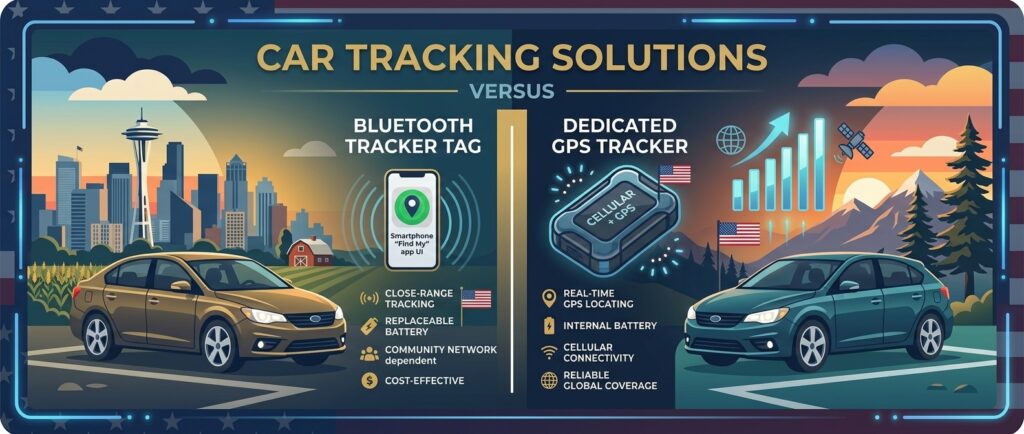


GPS Tracker vs Car Alarm: Which Protects Better in Qatar, UAE & Saudi Arabia?
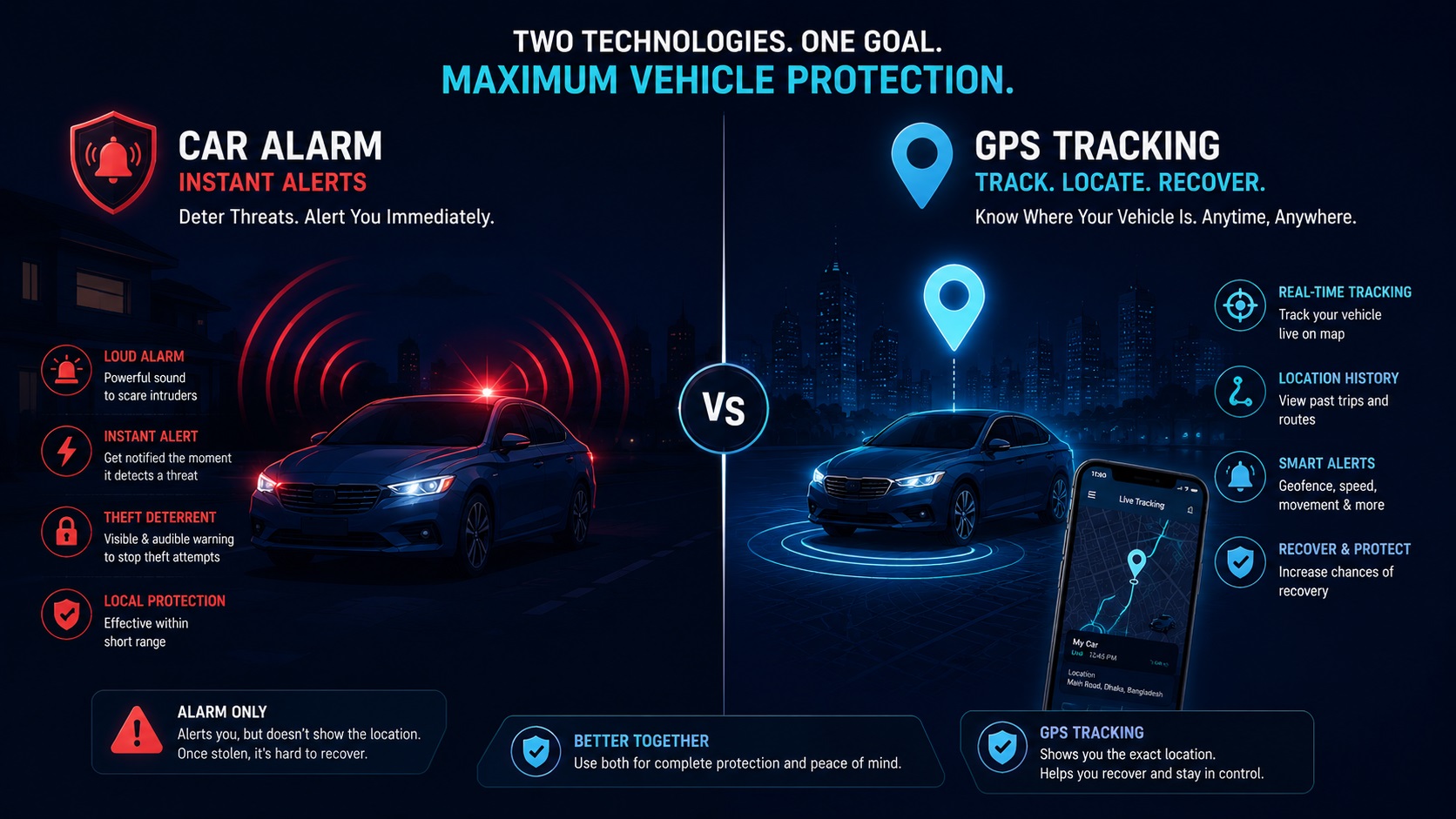
GPS Tracker vs Car Alarm: Which Protects Better?
Two very different approaches to vehicle security across Qatar, the UAE, and Saudi Arabia — here's how they actually compare when it matters most.
Car alarms have been the default vehicle security measure for decades, while GPS trackers represent a newer, connected approach. Many vehicle owners across the Gulf now wonder whether they still need a traditional alarm at all, or whether a GPS tracker alone offers better protection. The honest answer is that they solve different problems — and understanding that difference is the key to choosing the right setup for your vehicle.
🔊 How Each System Actually Works
A car alarm is a deterrent-first system. It uses sensors — shock, tilt, glass-break, or door sensors — to detect an intrusion attempt and responds immediately with sound and flashing lights, aiming to scare off a thief before they can steal the vehicle or its contents. It does nothing, however, once the vehicle is actually taken; an alarm has no way to tell you where your car went.
A GPS tracker takes the opposite approach. It doesn't necessarily stop a theft attempt from starting, but it gives you continuous visibility into the vehicle's location, both before and after a theft occurs, along with alerts if the vehicle moves unexpectedly. Some advanced trackers add remote engine immobilization, letting you stop the vehicle from being driven further once you're aware of the situation.
🔊 Car Alarm
- Deters opportunistic theft attempts with sound/lights
- Reacts the moment intrusion sensors are triggered
- No location data once the vehicle is actually taken
- One-time purchase, no ongoing subscription
- Limited value against experienced, determined thieves
📍 GPS Tracker
- Provides real-time location before and after theft
- Sends movement alerts even without a break-in trigger
- Some models support remote engine cut-off
- Requires an ongoing data/subscription plan
- Significantly improves recovery odds after theft
🥇 Which One Actually Stops Theft?
Neither system is foolproof on its own, and this is the most important point in the entire comparison. A car alarm can deter a casual, opportunistic thief who's testing door handles in a parking lot, but it's far less effective against someone who specifically targets a vehicle and comes prepared to disable or ignore the alarm quickly. A GPS tracker, meanwhile, generally doesn't prevent the initial theft attempt at all — its value shows up in what happens in the minutes and hours afterward, when location data becomes the single most important factor in whether the vehicle is recovered.
📊 Side-by-Side Comparison
| Factor | Car Alarm | GPS Tracker |
|---|---|---|
| Theft Deterrence | Strong against opportunistic thieves | Limited — doesn't actively deter |
| Post-Theft Recovery | None — no location capability | Strong — real-time location data |
| Ongoing Cost | One-time purchase only | Requires monthly subscription |
| Remote Control Features | None | Engine cut-off on select models |
| Effectiveness vs Skilled Thieves | Lower — can be quickly disabled | Higher, especially with hidden install and backup battery |
🚗 Which Vehicle Owners Should Prioritize What?
Street-Parked Daily Car
An alarm adds valuable deterrence in busy parking areas; pair with a hidden tracker for full protection.
High-Value Vehicle
Prioritize a GPS tracker with engine cut-off — recovery odds matter more than deterrence alone at this value level.
Company Fleet Vehicle
GPS tracking is essential for accountability and recovery; alarms add limited operational value at fleet scale.
💰 Cost Considerations Over Time
A car alarm is typically a one-time hardware purchase with no recurring cost, which makes it attractive on paper. A GPS tracker, by contrast, involves an ongoing subscription to cover cellular data and server access — but this recurring cost is what enables the continuous location visibility that makes recovery possible in the first place. When weighing the two, it helps to think of the tracker's subscription less as an added expense and more as the ongoing cost of insurance-like protection, since the entire value of the device depends on that live connection staying active.
🔒 Can You Use Both Together?
Yes, and for higher-value vehicles or business fleets, this combination is generally the most practical approach. A car alarm still adds a genuine layer of deterrence against casual theft attempts, while a hidden GPS tracker ensures that if a determined thief does get past the alarm, you still have a real path to recovery through location data and, on supported models, remote engine immobilization. The two systems address different stages of a theft attempt, so using them together closes gaps that either one alone would leave open.
🛡️ Insurance and Combined Security Discounts
Across Qatar, the UAE, and Saudi Arabia, some insurers offer premium discounts for vehicles fitted with approved security devices, and understanding how alarms and trackers factor into this can influence which combination makes the most financial sense. Alarms are generally viewed favorably as a deterrence measure, while GPS trackers are often weighted even more heavily by insurers because they directly improve recovery rates after a theft, which reduces the insurer's payout risk.
If lowering your insurance premium is part of your motivation for adding security equipment, it's worth asking your specific insurer which devices qualify for a discount and whether they require a particular certification or installation standard. Some insurers maintain an approved-device list, and installing an uncertified tracker or alarm might not qualify for the discount even if the device itself works perfectly well for personal security purposes.
❓ Frequently Asked Questions
Do I still need a car alarm if I already have a GPS tracker?
It depends on your priorities and where the vehicle is typically parked. If the car spends significant time in busy public parking areas where opportunistic theft attempts are more common, an alarm still adds a real layer of deterrence that a silent, hidden tracker doesn't provide on its own. For a vehicle parked mostly in a secured garage or compound, the tracker's recovery capability may matter more than the alarm's deterrence value.
Can a thief disable both systems at once?
A skilled, prepared thief can potentially disable a poorly installed alarm or a visible tracker relatively quickly. This is precisely why installation quality matters so much — a hidden tracker with backup battery power and a well-installed alarm are both considerably harder to defeat than devices installed carelessly or left in obvious locations.
Which option is better for a rental car business?
For rental fleets, GPS tracking is generally the higher priority, since it provides ongoing visibility into every vehicle's location and usage patterns, supports geofencing around agreed rental boundaries, and dramatically improves recovery odds if a rental vehicle is ever taken beyond agreed terms or genuinely stolen. Alarms add some value but don't address the operational visibility that a rental business typically needs day to day.
Is a smartphone-based tracking app enough, or do I need a dedicated device?
A phone left inside the vehicle can theoretically provide some location data through certain apps, but this isn't a reliable substitute for a dedicated tracker, since a thief will typically remove or discard any phone found inside the vehicle almost immediately. A properly hidden, purpose-built GPS tracker with its own independent power source remains the far more dependable option for genuine theft protection.
✅ Final Thoughts
A car alarm and a GPS tracker aren't competing solutions — they're complementary tools solving two different problems. If your main concern is deterring an opportunistic thief in a busy parking area, an alarm still adds real value. If your main concern is what happens after a theft, or you're managing a fleet or high-value vehicle, a GPS tracker is the far more decisive investment. For most owners across Qatar, the UAE, and Saudi Arabia genuinely serious about vehicle security, running both together — rather than choosing one over the other — offers the most complete protection available today.
📍 Ready to Add GPS Protection?
Compare real-time GPS tracker models with geofencing and engine cut-off support, built for daily drivers and fleets alike.