

GPS Tracking for Rental Car Companies in Dubai, Doha & Riyadh
GPS Tracking for Rental Car Companies in Dubai, Doha & Riyadh
How rental businesses across the Gulf use GPS tracking to prevent vehicle loss, enforce rental boundaries, and recover cars fast when agreements are broken.
Rental car companies face a unique set of risks that private vehicle owners don't: vehicles change hands constantly, drivers are often unfamiliar to the business, and cars can end up far outside agreed usage terms before anyone notices. GPS tracking has become close to a standard requirement for rental fleets across Dubai, Doha, and Riyadh — not as an afterthought, but as core operational infrastructure. Here's how it actually gets used in practice.
🚘 Why Rental Fleets Need Tracking More Than Most
A private car owner deals with tracking for occasional theft risk. A rental company deals with a constant stream of different drivers, higher exposure to cross-border or long-distance misuse, and a direct financial relationship where the vehicle itself is the primary asset generating revenue. This combination makes GPS tracking less of an optional security add-on and more of a core operational tool that touches pricing, insurance, and recovery all at once.
Continuous visibility needed across an entire rental fleet, not just flagged or suspicious vehicles.
Every vehicle passes through many different renters, unlike a personally owned car with one regular driver.
Faster response when a vehicle goes missing or leaves agreed boundaries directly protects the business's core assets.
🧩 Core Use Cases for Rental Fleet Tracking
📋 What to Look for in a Fleet-Grade Tracking System
| Feature | Why It Matters for Rental Businesses |
|---|---|
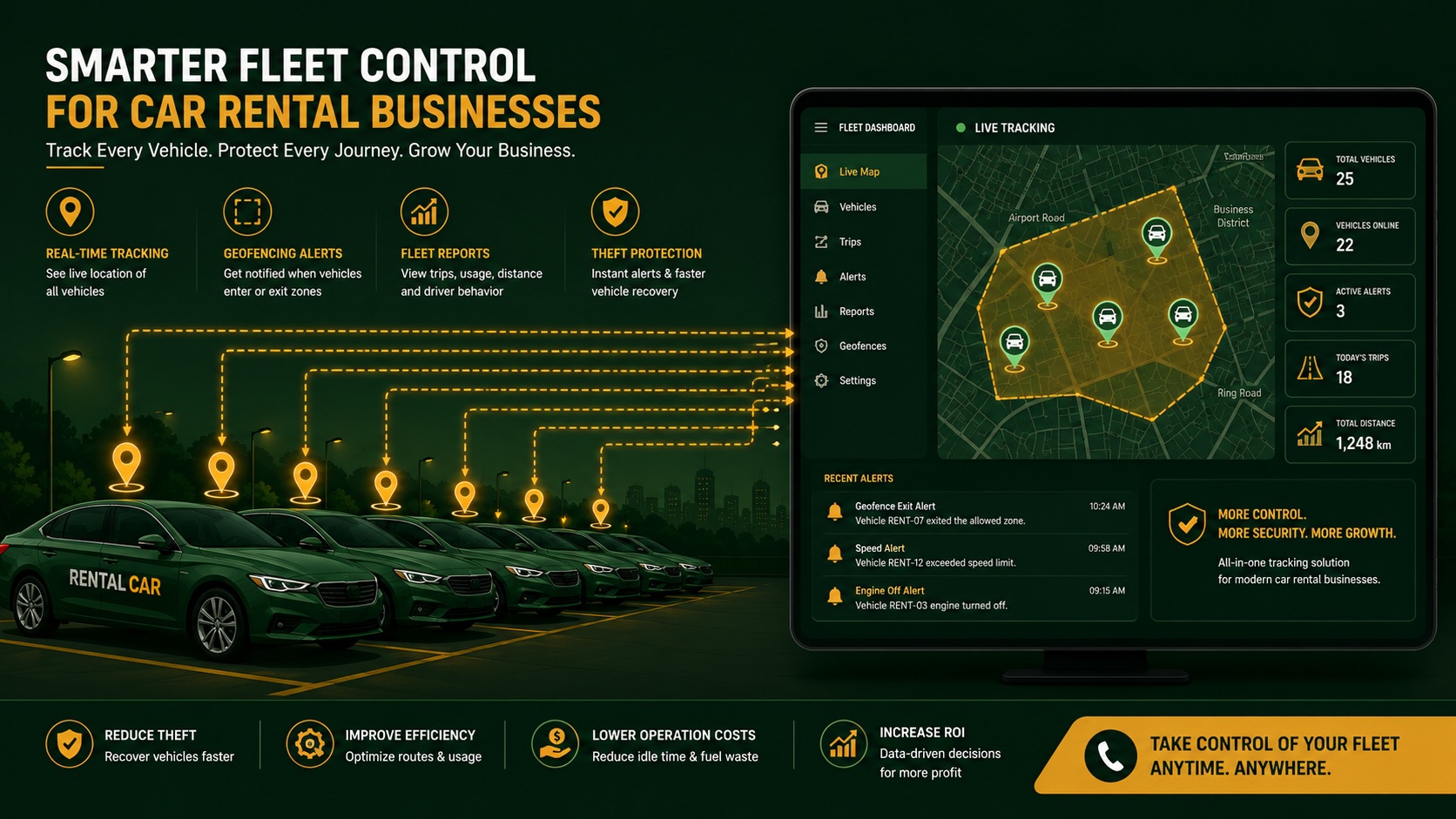
| Multi-Vehicle Dashboard | Managing dozens or hundreds of vehicles individually isn't practical — a unified view is essential. |
| Role-Based Access | Different staff (dispatch, management, support) need different levels of access to location and usage data. |
| Automated Geofence Alerts | Manually checking each vehicle's location isn't scalable; alerts should trigger automatically per rental agreement. |
| Historical Trip Reports | Useful for resolving disputes and providing documented usage data if a claim or complaint arises. |
| Bulk Installation Support | A provider who can install across many vehicles efficiently avoids excessive fleet downtime. |
🛠️ Rolling Out Tracking Across a Rental Fleet
🚫 Common Mistakes Rental Businesses Make
Failing to mention tracking in the rental agreement can create legal and reputational issues.
An alert that no one acts on quickly provides little real protection.
A poorly hidden tracker gets found and disabled by a renter intent on misuse.
Storing years of location history unnecessarily increases both cost and privacy exposure.
💼 Tracking's Role in Insurance and Liability
For rental companies, GPS tracking often plays directly into insurance conversations, since insurers view fleet-wide tracking as a strong risk-reduction measure that improves recovery odds and reduces payout exposure. Some insurers offer better commercial fleet terms when a rental business can demonstrate comprehensive tracking coverage across its vehicles, though the specific terms and required certification vary by provider and are worth confirming directly rather than assuming coverage.
Tracking data also frequently becomes relevant in liability discussions — for example, verifying a vehicle's location and speed at the time of an incident, or confirming whether a rental agreement's usage terms were actually followed. Maintaining clean, well-organized historical trip data makes these situations considerably easier to resolve fairly for both the business and the renter.
💰 Cost Planning for Fleet-Wide Rollout
Budgeting for tracking across an entire rental fleet looks quite different from budgeting for a single personal vehicle, since costs scale with fleet size in both obvious and less obvious ways. The device and installation cost per vehicle is the most visible expense, but the ongoing subscription cost — typically billed per vehicle per month — often becomes the larger long-term line item once a fleet grows past a few dozen cars.
Most providers offer volume pricing that improves as fleet size increases, so it's worth negotiating subscription rates directly rather than accepting a standard per-vehicle quote designed for individual consumers. It's also worth asking whether the provider charges extra for features like remote engine cut-off or advanced reporting, since some fleet management platforms bundle these into a premium tier rather than the base subscription.
Beyond the tracking system itself, factor in the operational cost of actually using the data — someone on your team needs to monitor geofence alerts, respond to overdue-return notifications, and periodically review usage reports. A tracking system that generates alerts nobody acts on quickly provides only a fraction of its potential value, so this staffing consideration deserves as much planning attention as the hardware and subscription costs.
❓ Frequently Asked Questions
Do renters need to be told their vehicle is tracked?
Yes, disclosing tracking clearly within the rental agreement is both standard industry practice and the most straightforward way to avoid disputes later. Most rental agreements across the Gulf already include general terms about vehicle usage monitoring, and adding specific language about GPS tracking is a natural extension of that existing practice.
Can GPS tracking help with cross-border rental restrictions?
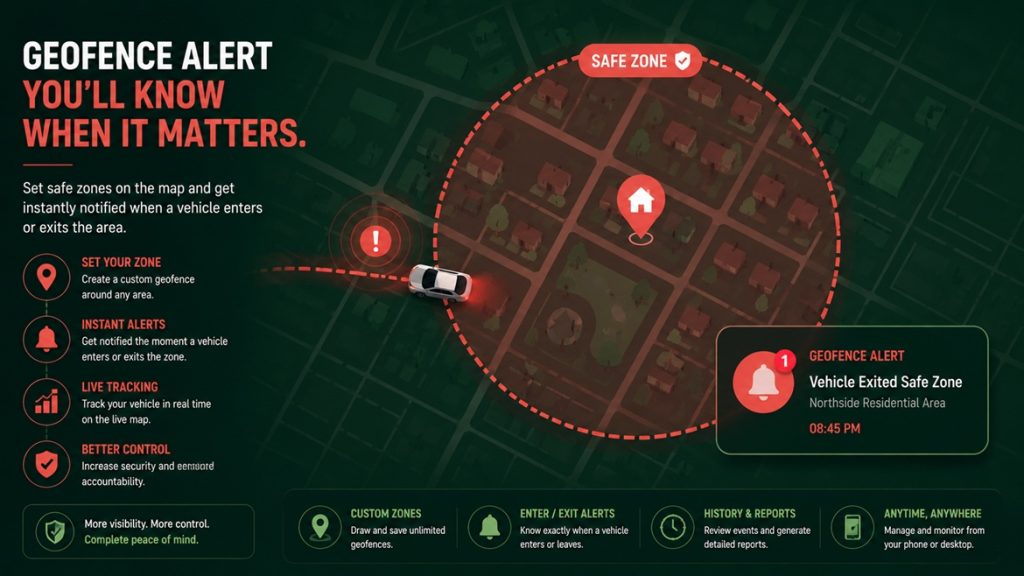
Yes — geofencing is particularly useful here, since it lets a rental company set a permitted country or region boundary matching the specific rental agreement and receive an immediate alert if a vehicle crosses it, rather than discovering the violation only when the car is returned or not returned at all.
What happens if a renter finds and removes the tracker?
This is a genuine risk, which is why professional, well-concealed installation matters even more for rental fleets than for personal vehicles, given that renters have extended unsupervised access to the vehicle. Choosing a tracker with a backup battery also helps, since it continues reporting for a period even if primary power is disconnected, potentially still capturing useful location data before signal is fully lost.
Should small rental businesses with just a few cars bother with fleet tracking?
Even a small rental operation benefits from the same core protections — geofencing, real-time location, and usage verification — just at a smaller scale and lower total cost. The relative value tends to be just as strong for a five-car operation as for a five-hundred-car fleet, since the core risks being addressed (loss, misuse, dispute resolution) don't really shrink proportionally with fleet size.
✅ Final Thoughts
For rental car companies operating across Dubai, Doha, and Riyadh, GPS tracking has moved well past being a nice-to-have security feature — it's now core operational infrastructure that touches recovery, billing accuracy, insurance terms, and dispute resolution all at once. The businesses getting the most value treat it as a fleet-wide standard rather than a reactive tool reserved for high-value vehicles alone, paired with clear rental-agreement disclosure and a genuine internal process for acting on alerts quickly when they matter.
🚗 Equip Your Rental Fleet
Explore fleet-grade GPS tracker models with multi-vehicle dashboards, geofencing, and bulk installation support for rental businesses.