


Can a GPS Tracker Stop Catalytic Converter Theft?
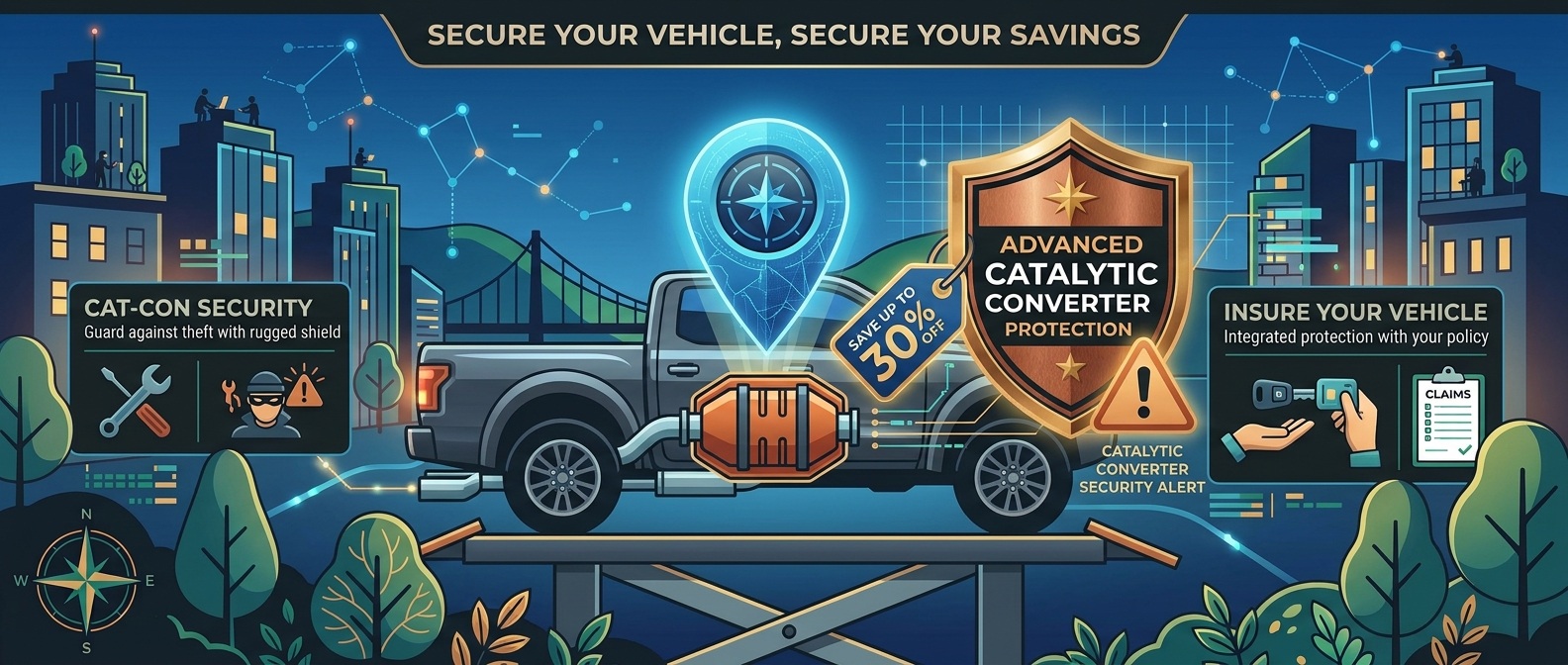
Can a GPS Tracker Stop Catalytic Converter Theft?
One of the fastest-growing vehicle crimes in the USA — here's what tracking can and honestly can't do about it.
Catalytic converter theft has become one of the most common vehicle-related crimes across the USA in recent years, driven by the rising value of the precious metals inside them and how quickly an experienced thief can remove one — sometimes in under two minutes. Many owners searching for a GPS tracker to stop catalytic converter theft are hoping for a direct solution, so it's worth being honest upfront about what tracking actually does here, and what other measures genuinely matter more for this specific crime.
🔧 Why Catalytic Converters Specifically Get Targeted
Catalytic converters contain small amounts of platinum, palladium, and rhodium — precious metals worth considerably more per ounce than gold in many periods, making even a single converter a meaningful payday for a thief who can remove several in a single night. Certain vehicle types, particularly trucks and SUVs with higher ground clearance, are especially quick and easy targets since a thief can often slide underneath without needing to jack the vehicle up first.
📍 What a GPS Tracker Actually Does (and Doesn't Do) Here
🛡️ What Actually Works Against Converter Theft
| Measure | How It Helps |
|---|---|
| Converter shield or cage | Physical steel enclosure that significantly slows down removal, the single most effective deterrent |
| Etching the converter with your VIN | Makes the stolen part traceable and less attractive to scrap buyers, reducing resale value to thieves |
| Motion-activated vibration alarm | Specifically detects the vibration of someone working underneath the vehicle |
| Parking in well-lit, high-visibility areas | Reduces the low-supervision conditions thieves specifically look for |
| Standard vehicle GPS tracker | Doesn't directly prevent the theft, but supports broader vehicle security |
🔍 Where GPS Tracking Still Adds Real Value
None of this means a GPS tracker is useless in the broader context of vehicle security — it just isn't the right tool specifically for converter theft. A tracker remains genuinely valuable for the scenarios it's actually built for: whole-vehicle theft, unauthorized use, and general location visibility. If your vehicle is targeted for a full theft rather than just the converter, the same real-time alert and recovery features covered in our GPS tracker buying checklist apply exactly as they would for any other vehicle theft scenario.
Some owners specifically layer both approaches — a converter shield as the direct physical deterrent, plus a standard GPS tracker for overall vehicle security — treating them as complementary tools addressing different risks rather than expecting either one alone to cover every possible theft scenario.
🚫 Common Mistakes Vehicle Owners Make
A whole-vehicle tracker doesn't specifically detect or prevent converter removal from a stationary car.
The single most effective deterrent is often overlooked in favor of relying on tech-based solutions alone.
An inexpensive step that meaningfully reduces resale value to a thief, often skipped entirely.
Consistent, predictable parking in a low-visibility area makes repeated targeting easier for local theft rings.
❓ Frequently Asked Questions
Which vehicles are most commonly targeted for catalytic converter theft?
Trucks, SUVs, and hybrid vehicles tend to see disproportionately higher targeting — trucks and SUVs due to higher ground clearance making removal faster, and hybrids because their converters often contain higher concentrations of the valuable metals compared to standard combustion-only vehicles.
Does my car insurance cover catalytic converter theft?
Comprehensive coverage typically covers catalytic converter theft, though standard liability-only policies generally do not. It's worth confirming your specific policy's coverage and deductible directly with your insurer, since replacement costs can be substantial.
Is a vibration-sensor alarm better than a standard GPS tracker for this specific problem?
For converter theft specifically, yes — a sensor designed to detect vibration or movement underneath the vehicle addresses this exact crime pattern more directly than a standard GPS tracker, which is built around vehicle-level location and movement rather than component-level tampering detection.
📈 Why This Crime Surged in the First Place
Understanding the underlying driver behind catalytic converter theft helps explain why it's become such a persistent problem rather than a passing trend. The precious metals inside converters — platinum, palladium, and rhodium — are used in industrial and automotive manufacturing applications, and their market prices have seen significant volatility and periods of sharp increase in recent years. When these metal prices rise, the resale value of a stolen converter to scrap and recycling buyers rises right along with it, directly increasing the financial incentive for theft.
This price-driven pattern means converter theft rates tend to track metal market prices fairly closely over time, which is part of why the problem can feel like it comes in waves rather than staying at a constant, predictable level. Even during periods when rates ease somewhat, the underlying vulnerability — an easily accessible, quickly removable, valuable component on the underside of a parked vehicle — doesn't go away, which is why physical prevention measures remain relevant regardless of where metal prices currently sit.
🏙️ Location and Parking Pattern Risk Factors
Beyond vehicle type, where and how a car is typically parked meaningfully affects theft risk for this specific crime. Vehicles parked overnight in large, poorly lit parking lots — shopping centers, park-and-ride commuter lots, apartment complex parking areas — see disproportionately higher targeting than vehicles parked in attached garages or well-monitored areas, simply because the low-supervision conditions give a thief the uninterrupted few minutes needed to complete the theft.
For owners without access to garage parking, seeking out well-lit spots near building entrances or high-foot-traffic areas, even within the same parking lot, can meaningfully reduce risk compared to parking in a poorly lit, low-visibility corner simply because it happened to be closer to a specific store entrance. This kind of small, consistent parking habit adjustment costs nothing and works alongside any physical security device you choose to install.
🔩 Understanding Converter Shield Options
Not all converter shields are built the same way, and it's worth understanding the general categories before choosing one. Universal shields are designed to fit a range of vehicle types with some adjustment, offering broader compatibility but sometimes a less precise fit than a vehicle-specific option. Purpose-built shields designed for a specific make and model typically offer a tighter, more tailored fit and can be somewhat faster to install professionally, though they're generally only available for more common, higher-theft-risk vehicles that manufacturers or aftermarket security companies have specifically prioritized.
Whichever type you choose, professional installation is generally worth the added cost over a DIY approach, since a properly installed shield needs to genuinely resist cutting and prying tools without interfering with the vehicle's exhaust system heat dissipation or ground clearance in ways that could create other problems.
✅ Final Thoughts
A standard GPS tracker doesn't directly stop catalytic converter theft, since the vehicle typically stays parked and stationary during the incident itself — and being upfront about that matters more than an oversold promise. A physical shield or cage, VIN etching, and smart parking choices are the measures that actually address this specific crime, with a GPS tracker remaining valuable as a complementary layer for broader vehicle security rather than a direct solution to this particular problem.
🔒 Build a Complete Vehicle Security Setup
Explore GPS tracker models for broader vehicle protection, and pair with a converter shield for complete coverage.