

GPS Tracker vs Apple AirTag 2026 – Which is Better for Your Car?
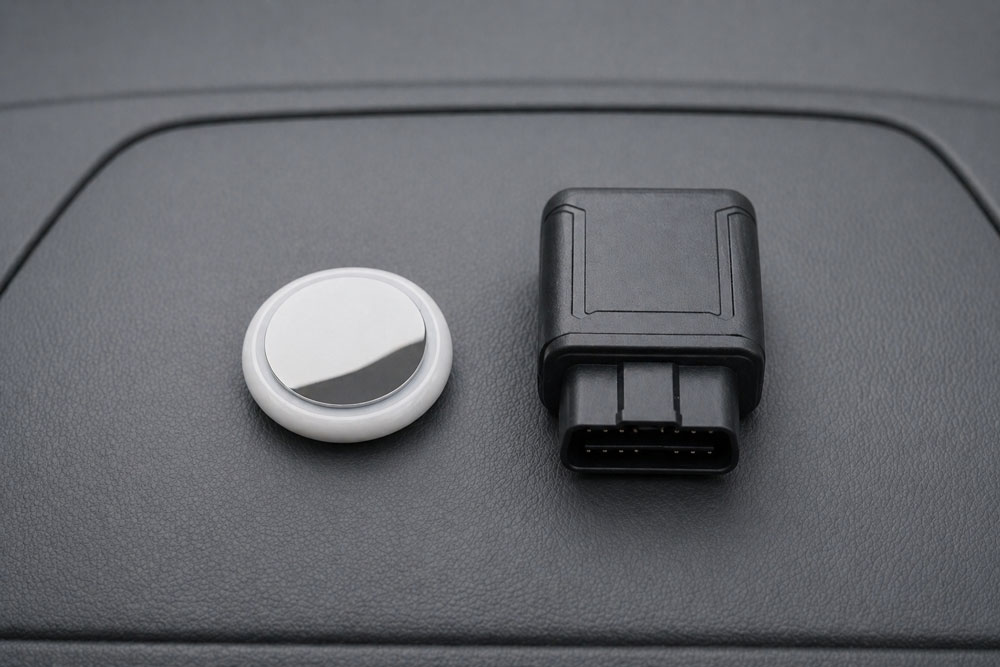
GPS TrackervsApple AirTag
Which is Better for Your Car?
By MototechGPS Team · Updated April 2026 · 9 min read
Apple AirTag is cheap, convenient, and requires zero monthly fees. A dedicated GPS tracker costs more but works differently. If you are trying to decide between the two for your car, this honest comparison will tell you exactly which one is right for your situation — and why choosing the wrong one could mean losing your vehicle.
Head-to-Head Comparison
How the Technology Works
Uses GPS satellites + 4G LTE cellular network to transmit your car's location every 15 seconds. Works anywhere there is cellular coverage — across the entire US. Updates are sent directly to your phone in real time regardless of whether anyone else is nearby.
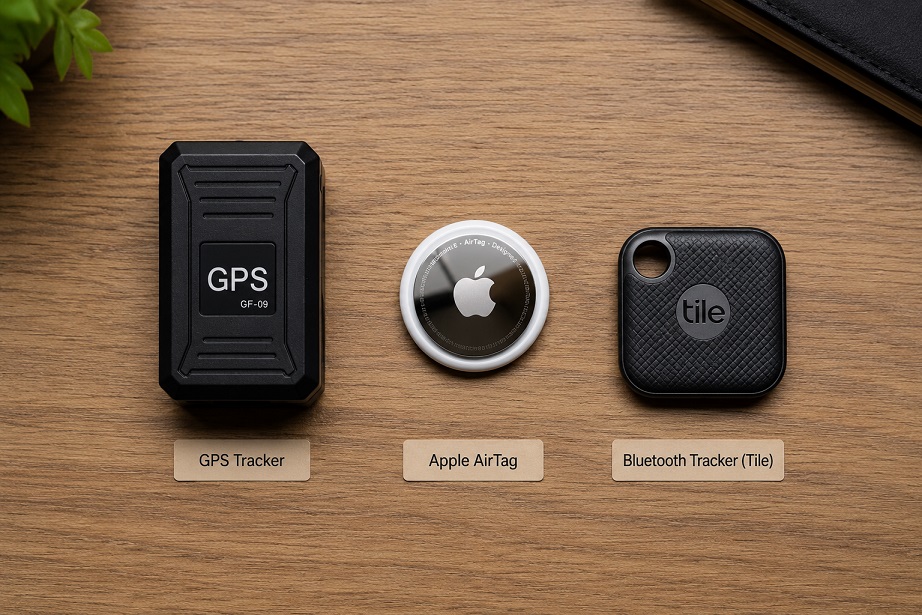
Uses Bluetooth only. Relies on other Apple devices passing nearby to relay its location to you. In a crowded city, updates are frequent. In a suburban street, parking garage, or rural area, hours can pass between location updates. It does NOT use GPS or cellular.
Theft Recovery — What Matters Most
Sends you an instant alert the moment your car is moved. Open the app and see a live moving dot on the map. Share the link with police. Stolen cars have been recovered within hours using Bouncie's live tracking. The 15-second update rate gives police near-live position for a vehicle intercept.
Sends a movement notification, but location updates only when another iPhone passes nearby. If your car is driven to an industrial area, empty parking lot, or rural chop shop, no Apple devices may pass for hours — leaving police with a location that is 2–10 miles behind the thief. Additionally, thieves increasingly know to scan for and destroy AirTags.
Cost — Upfront vs Long-Term
Device ~$90 + $8–$9/month subscription. Over 3 years: ~$378. Includes crash detection, tamper alerts, vehicle diagnostics, and real-time tracking. Monthly fee covers cellular data costs.
$29 one-time. Zero monthly fees — ever. Extremely low cost of entry. Requires an iPhone to use. Over 3 years: $29 total vs GPS tracker's $378. Massive cost difference.
Additional Features
Crash detection. Tamper alerts. Speed monitoring. Geofencing. Hard braking alerts. Vehicle diagnostics (engine codes, fuel level). Trip history. Idle time reports. Alexa and Google Home integration. All from one device.
Location tracking only. No crash detection. No speed alerts. No geofencing that triggers alerts. No vehicle diagnostics. No trip history. Single-purpose tracking device with no additional safety features.
Can Thieves Detect It?
Cellular GPS trackers like Bouncie (OBD) and LandAirSea (magnetic) use GPS and 4G LTE — not Bluetooth. They cannot be detected by phone scanning apps. A professional GPS sweep device could theoretically find them, but this is rare. Hidden magnetic trackers are extremely difficult to locate without a physical search.
AirTags use Bluetooth and actively alert nearby iPhones to their presence via Apple's anti-stalking system. Any iPhone near a moving AirTag that doesn't belong to them will receive an "Unknown AirTag detected" alert — meaning thieves with iPhones are immediately alerted. Android apps like AirGuard can also detect AirTags. Savvy thieves destroy them routinely.
Our Honest Verdict
AirTag is excellent for finding a misplaced wallet in a coffee shop or a lost backpack in an airport. It is not adequate car theft protection. Its Bluetooth-only technology, detectable signal, and passive update system make it unreliable in exactly the scenarios where you need tracking most — a stolen vehicle being driven quickly to an unfamiliar location.
For real car protection, a cellular GPS tracker is the only responsible choice. Bouncie at $8–$9/month is the best value option — less than the cost of two coffees per month for genuine crash detection, real-time tracking, and theft recovery capability.
→ Get Bouncie — Real Car ProtectionWhen AirTag DOES Make Sense
AirTag is not useless — it is excellent in specific situations. Use it as a backup alongside a cellular GPS tracker, not as a replacement. Place it hidden deep in a location a thief would not think to check — inside a spare tire, sewn into seat upholstery, or inside a hollow door panel. The GPS tracker gives you real-time tracking; the AirTag gives you a backup location if the GPS tracker is found and removed.
Frequently Asked Questions
Is Apple AirTag good for tracking a car?
AirTag is not reliable for car tracking or theft recovery. It uses Bluetooth, not GPS or cellular, meaning it only updates location when another Apple device passes nearby. In theft recovery scenarios, this unreliable update pattern leaves police with outdated location data. For car tracking, a dedicated cellular GPS tracker is significantly more effective.
Can thieves find an AirTag in your car?
Yes — easily. Apple's anti-stalking system causes nearby iPhones to display an "Unknown AirTag detected" notification when a moving AirTag that doesn't belong to them is nearby. Many thieves now carry iPhones or use free Android apps designed to detect AirTags. Cellular GPS trackers do not have this vulnerability.
What is cheaper — GPS tracker or AirTag?
AirTag costs $29 with zero ongoing fees. A GPS tracker like Bouncie costs ~$90 device + $8–$9/month. Over 3 years, AirTag costs $29 total vs Bouncie's ~$378. AirTag is dramatically cheaper. However, for car theft protection, the additional cost of a GPS tracker is justified by its significantly superior tracking capability and safety features.
GPS Tracker Buying Guide 2026 — Everything You Need to Know
By MototechGPS Team · Updated April 2026 · 12 min read
Buying a GPS tracker for the first time is confusing. Dozens of devices, dozens of price plans, conflicting claims about update speed and battery life. Most buyers end up choosing based on device price — and overpaying hundreds of dollars in subscription fees over the following years.
This complete buying guide covers every type of GPS tracker available in 2026, what features actually matter, what to ignore, how to calculate real cost, and which tracker is right for your specific situation.
Step 1 — Understand the 4 Types of GPS Trackers
🔌 OBD-II Plug-In Trackers
Plug into the diagnostic port under your steering wheel. No wiring. No battery. Draw constant power from your car. Give you location + vehicle data (speed, engine codes, fuel). Best for: daily drivers, parents, small fleets. Examples: Bouncie, Vyncs, Konnect.
🧲 Magnetic Hidden Trackers
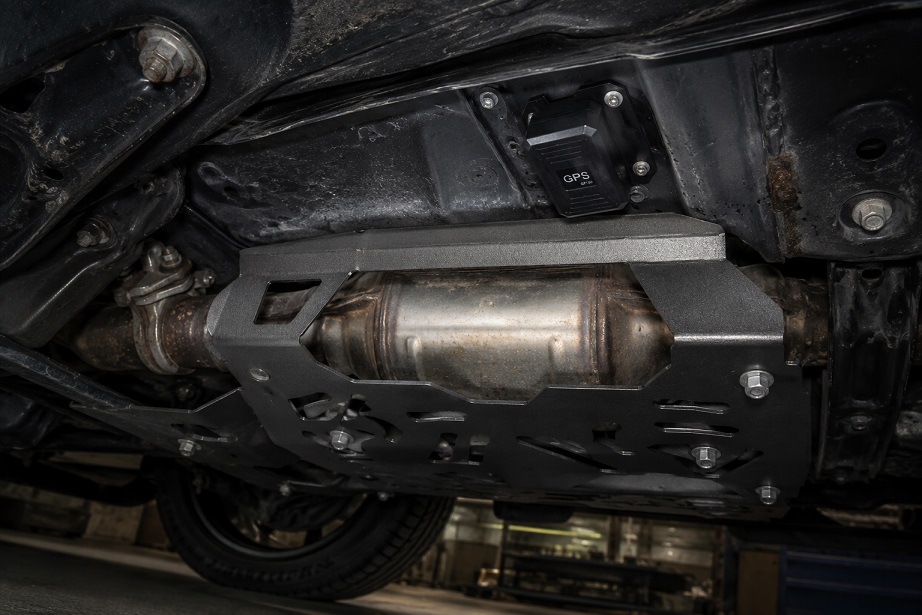
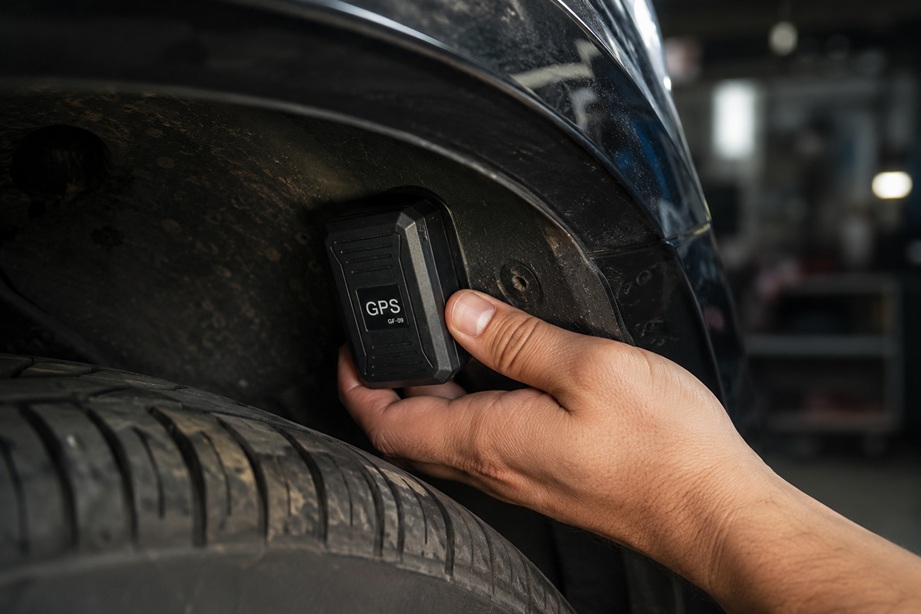
Attach magnetically under the vehicle. Completely invisible. Run on internal rechargeable batteries (2–4 weeks). Give location only — no vehicle data. Best for: theft protection backup, covert monitoring. Examples: LandAirSea 54, SpaceHawk.
🔧 Hardwired Trackers
Permanently wired to your car's electrical system. Never need charging. Cannot be removed without tools. Most secure and tamper-proof option. Best for: high-value vehicles, fleet trucks, theft prevention. Require professional or basic DIY installation.
🔋 Portable Battery Trackers
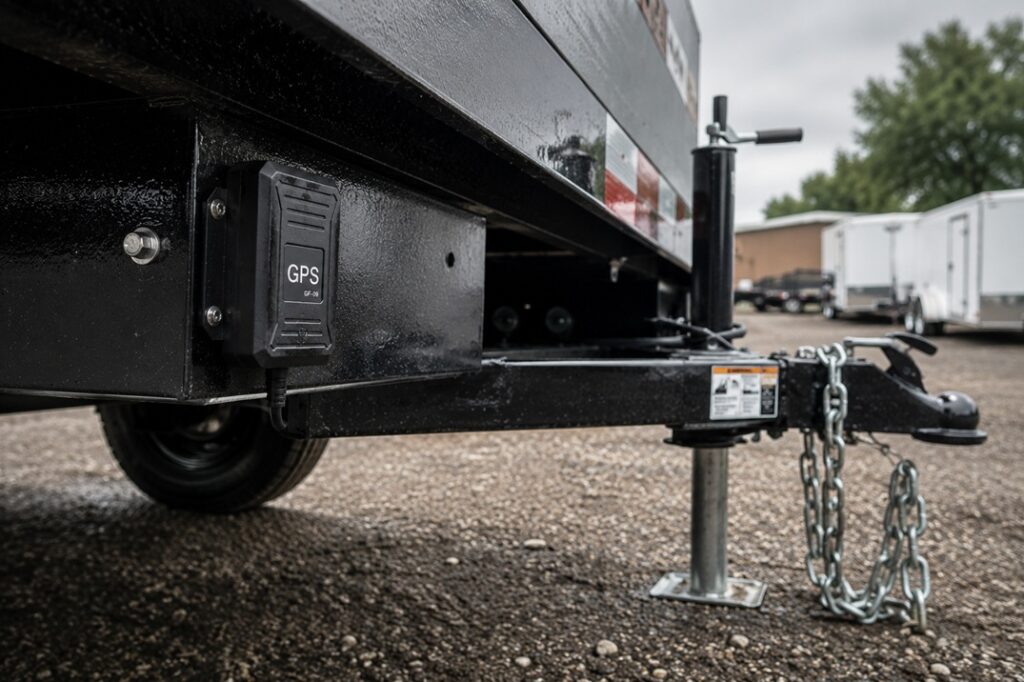
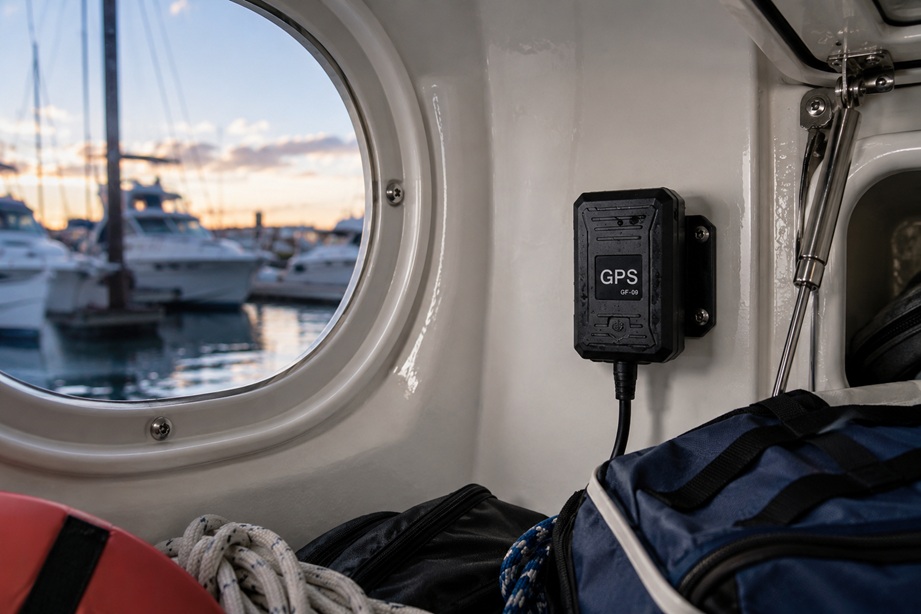
Self-contained rechargeable battery devices. Move between vehicles, bags, or assets. No installation. Best for: motorcycles, boats, equipment, or temporary vehicle tracking. Examples: Spytec GL300, Tracki, PRIMETRACKING.
Step 2 — The 7 Features That Actually Matter
1. Location Update Speed
How frequently does the tracker update your vehicle's position? The options range from every 1 second (Spytec, Konnect) to every 3 minutes (MOTOsafety). For theft recovery, parent monitoring, and fleet dispatch, faster is better. For basic "where did my car end up" use cases, 60-second updates are fine. Bouncie's 15-second default rate is the sweet spot for most users.
2. Real Total Cost (Not Just Device Price)
This is where most buyers make expensive mistakes. A $25 device with a $25/month plan costs $325 in year one and $925 over 3 years. A $90 device with an $8/month plan costs $186 in year one and $378 over 3 years. Always calculate 3-year total cost before buying.
3. Contract vs No Contract
Some GPS trackers require 12–36 month contracts (especially enterprise fleet systems). Others like Bouncie, Konnect, and Spytec are month-to-month with no penalty for cancellation. Unless you are 100% certain of long-term commitment, choose no-contract options — they offer the same features without the risk.
4. Crash Detection
As of 2026, Bouncie is one of the very few affordable GPS trackers that includes automatic crash detection. If you have a teen driver, an elderly parent, or anyone who drives alone regularly, this feature could be life-saving. It triggers when the accelerometer detects a sudden impact consistent with a collision.
5. Tamper and Disconnect Alerts
If your tracker is visible (OBD port), tamper alerts notify you the instant it is unplugged. Bouncie and Konnect both offer this. For hidden magnetic trackers, tamper alerts are less relevant since the tracker is not visible.
6. Cellular Network Coverage
All real-time GPS trackers use cellular networks (AT&T, T-Mobile, or Verizon) to transmit location. Check which network your tracker uses and whether that network has strong coverage in your area. Most US trackers use AT&T and T-Mobile. Rural users should confirm coverage before purchasing.
7. App Quality
You will look at your tracking app dozens of times per month. A confusing or unreliable app makes even the best hardware frustrating. Bouncie consistently receives the highest app quality ratings among GPS car trackers. Check current App Store and Google Play ratings before committing.
Step 3 — Watch Out for These 5 Hidden Costs
1. Activation fees — Some trackers charge $25–$50 to activate the device on their network. Bouncie charges $0.
2. "Free" devices with expensive plans — A $0 device that requires a $25/month plan costs $300/year. A $90 device with $8/month costs $96/year. The math favors the more expensive device.
3. Limited included data periods — Some "no monthly fee" trackers include only 3–6 months of cellular data, then charge expensive renewals.
4. Cancellation fees — Contract-based trackers often charge $100–$300 to cancel early. Always ask before signing up.
5. Feature paywalls — Some trackers advertise features then charge extra to access them (faster updates, historical data, additional alerts). Read the full plan details before buying.
Step 4 — Match Tracker to Your Situation
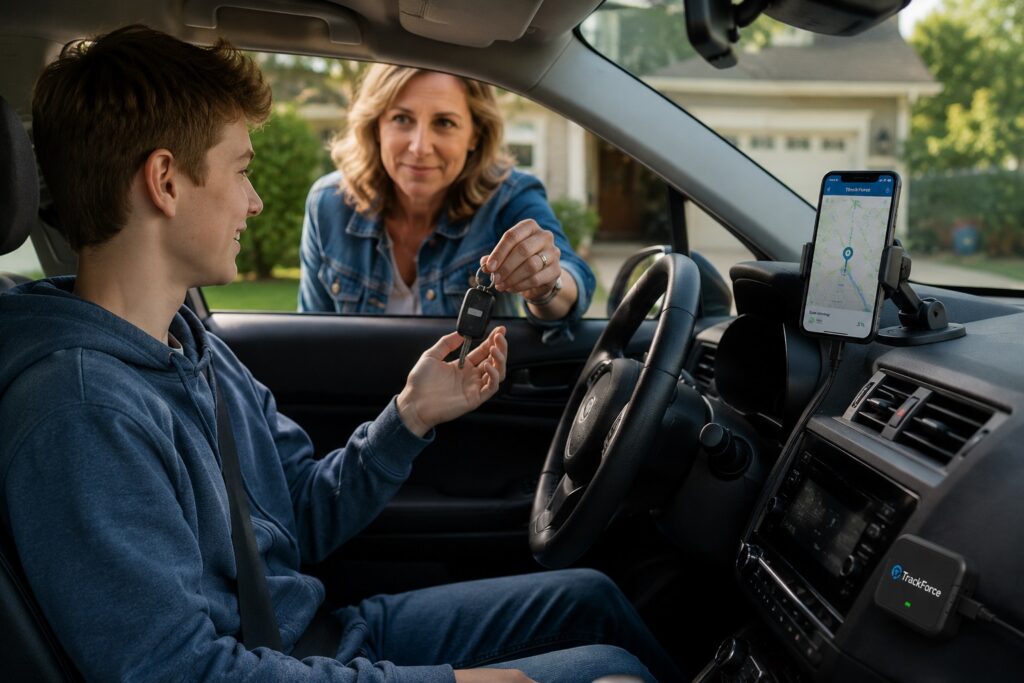
👨👧 I'm a Parent with a Teen Driver
Best choice: Bouncie GPS — crash detection, tamper alerts, 15-second tracking, and the best app for families. $8–$9/month. If your teen just got their license and needs coaching, add MOTOsafety for the A-F daily report card. → Get Bouncie
🏠 I Want Theft Protection on My Car
Best choice: Bouncie OBD + LandAirSea 54 magnetic hidden backup. Dual-layer protection costs ~$33/month combined but gives you the highest possible theft recovery odds — one visible OBD tracker and one hidden magnetic tracker that continues broadcasting if the OBD device is removed.
💰 I Don't Want Monthly Fees
Best choice: Vyncs Premium at ~$110/year (no monthly billing). Or PRIMETRACKING with 1–3 years of data included at purchase. For the absolute cheapest option with zero ongoing cost: Apple AirTag at $29 (with the limitations described in our GPS Tracker vs AirTag article).
🚛 I Run a Small Business Fleet
Best choice: Bouncie at $6.70/vehicle/month for 3+ devices. No contract. Idle time reports, trip history, geofencing, and crash detection per vehicle. For 10+ vehicles with full fleet management needs, consider Matrack or Spytec Fleet.
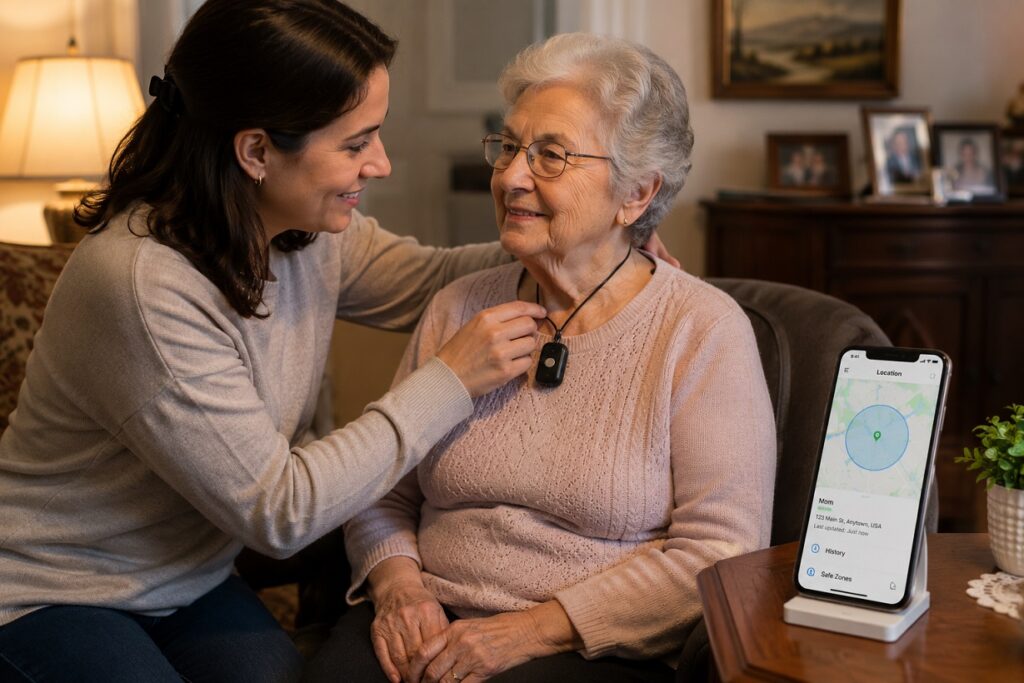
👴 I'm Monitoring an Elderly Parent Who Drives
Best choice: Bouncie GPS — plug-and-forget OBD device your parent never needs to interact with, crash detection for emergencies, and family app sharing so multiple siblings can monitor simultaneously. → Get Bouncie
🏍️ I Have a Motorcycle
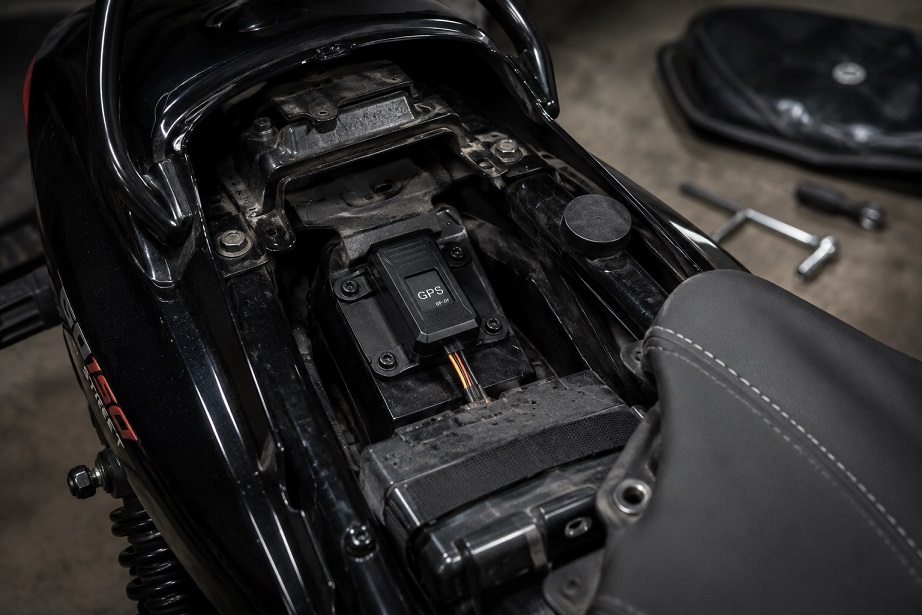
Best choice: Monimoto 7 for all motorcycles (no OBD needed, 6–12 month battery). If your bike has an OBD port, Bouncie is the best value option at $8–$9/month with crash detection.
Bouncie GPS — best overall value, crash detection, no contract, easiest app. Only $8–$9/month.
→ Get Bouncie GPS — Official SiteFrequently Asked Questions
How do GPS trackers work?
GPS trackers receive signals from a network of satellites orbiting the Earth to calculate their exact coordinates. They then transmit that location data via 4G LTE cellular networks to a server, which displays it in your tracking app. This entire process happens every few seconds to every few minutes depending on your tracker's update rate setting.
Do GPS trackers work without WiFi?
Yes — GPS trackers use cellular networks (the same networks your phone uses), not WiFi. They work anywhere with cellular coverage, including while driving at highway speed. WiFi is not required for either the tracker or your phone to track location (though your phone does need internet access to view the app).
How accurate are GPS trackers?
In areas with good cellular and GPS signal, modern trackers are accurate to within 10–30 feet of the vehicle's actual location. Accuracy can decrease in areas with poor cellular coverage, inside parking garages with thick concrete walls, or in deep urban canyons surrounded by tall buildings. For most everyday tracking use cases, this level of accuracy is more than sufficient.
Is it legal to use a GPS tracker in the US?
Yes — it is legal in all 50 US states to install a GPS tracker on a vehicle you own. You have no legal obligation to inform the driver (though transparency is recommended for family use). It is not legal to track a vehicle you do not own without the owner's consent. Always ensure you have legal ownership or rights to the vehicle you track.