

GPS Tracker vs ELD: What US Truck Drivers and Fleet Owners Need to Know
2026 USA Trucking Guide
GPS Tracker vs ELD: What US Truck Drivers and Fleet Owners Need to Know
They look similar and both track location, but they serve different purposes and carry very different legal weight.
Many new fleet owners assume that a GPS tracker and an ELD (electronic logging device) are the same thing. They overlap in some ways, yet confusing them can lead to compliance problems, wasted money, or both. Understanding the difference helps you buy the right hardware the first time.
📋 What an ELD Actually Is
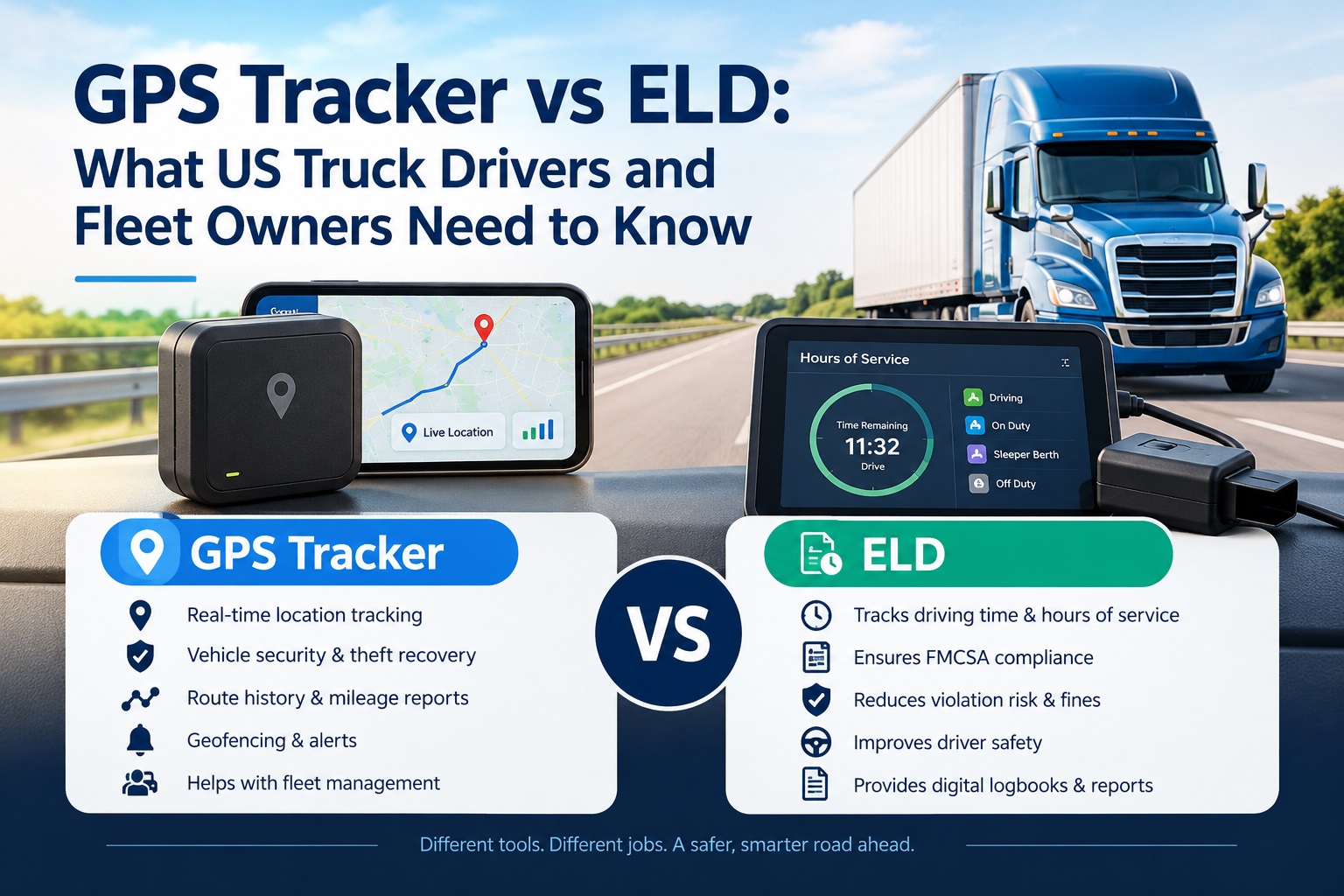
An ELD is a device that automatically records a driver’s hours of service, meaning how long they have been driving and when they must rest. Federal rules require it for most commercial drivers who must keep records of duty status, and the device must meet technical standards set by the Federal Motor Carrier Safety Administration (FMCSA). Registration matters — only models that appear on the FMCSA’s official registered list count as compliant, so a device merely claiming to be an ELD is not enough. Its main job is compliance — hours-of-service data helps prevent driver fatigue and gives inspectors a tamper-resistant record.
📍 What a GPS Tracker Does Differently
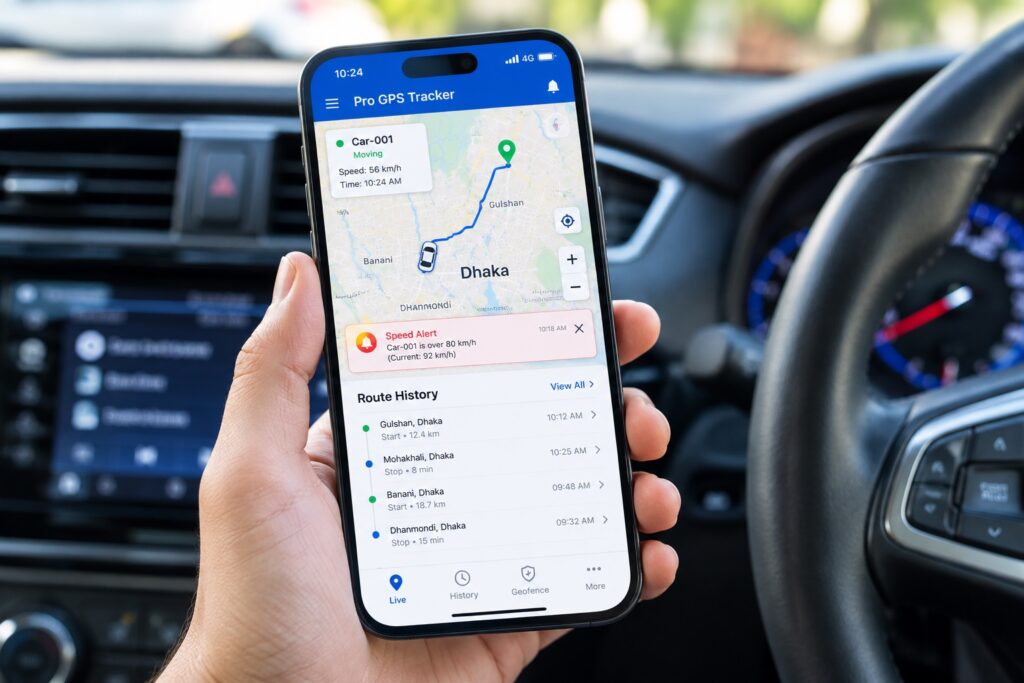
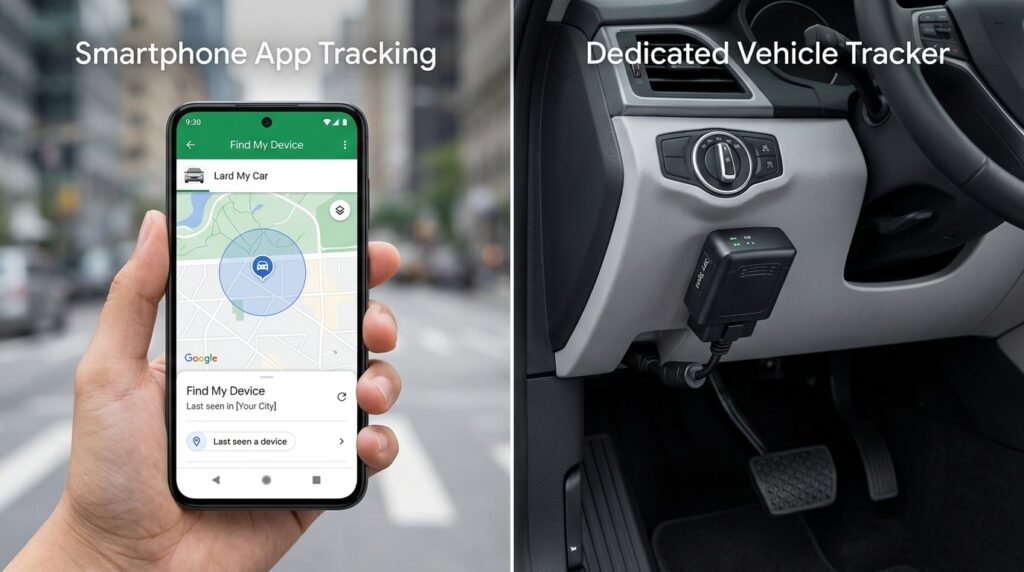
A standard GPS tracker focuses on where a vehicle or asset is right now and where it has been. Location and theft protection are its core strengths, including geofencing, motion alerts, and recovery support. It suits assets beyond the cab — trailers, equipment, and vehicles that are exempt from logging rules can all use a simple tracker. It usually costs less, since it does not need the certified hardware and software that an ELD requires.
📊 Side-by-Side Comparison
| Factor | GPS Tracker | ELD |
|---|---|---|
| Main purpose | Location, theft recovery, fleet visibility | Recording driver hours-of-service for compliance |
| Federally regulated device | No | Yes, must meet FMCSA standards and appear on the registered list |
| Typical cost | Lower | Higher, because of compliance features |
| Best for | Trailers, equipment, exempt vehicles, small fleets wanting visibility | Commercial drivers subject to hours-of-service rules |
🔎 Do You Actually Need an ELD?
Not every driver falls under the rule. Some exemptions exist — for example, certain short-haul operations, drivers who rarely need to keep logs, and some older engine model years can be exempt, though the details are specific. Rules vary by operation, so check your own situation against FMCSA guidance rather than relying on a general summary, and consult your compliance contact if you are unsure. Getting this wrong is costly, since running without a required ELD can lead to violations, so verify before you buy anything.
🛠️ How Many Fleets Use Both
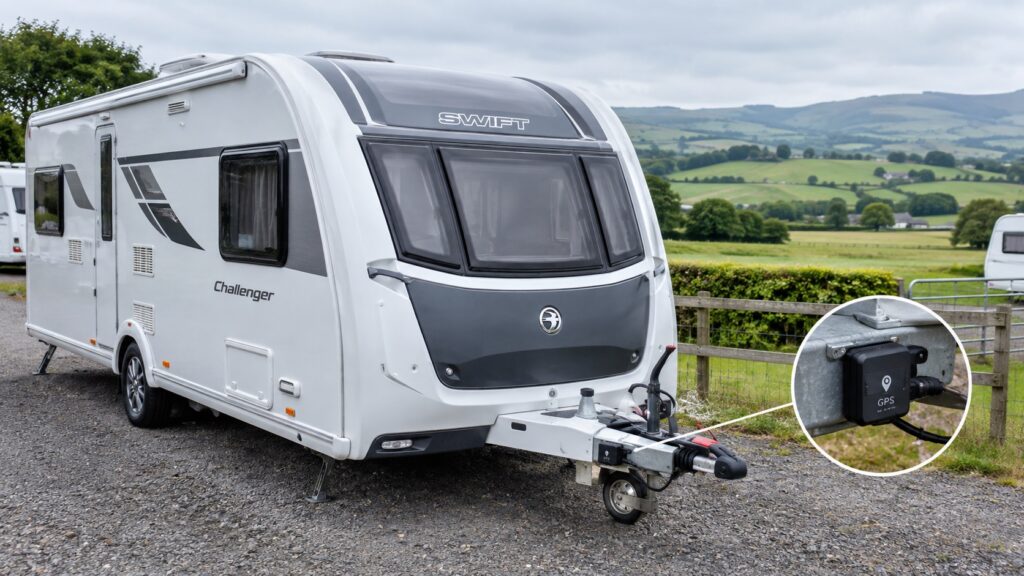
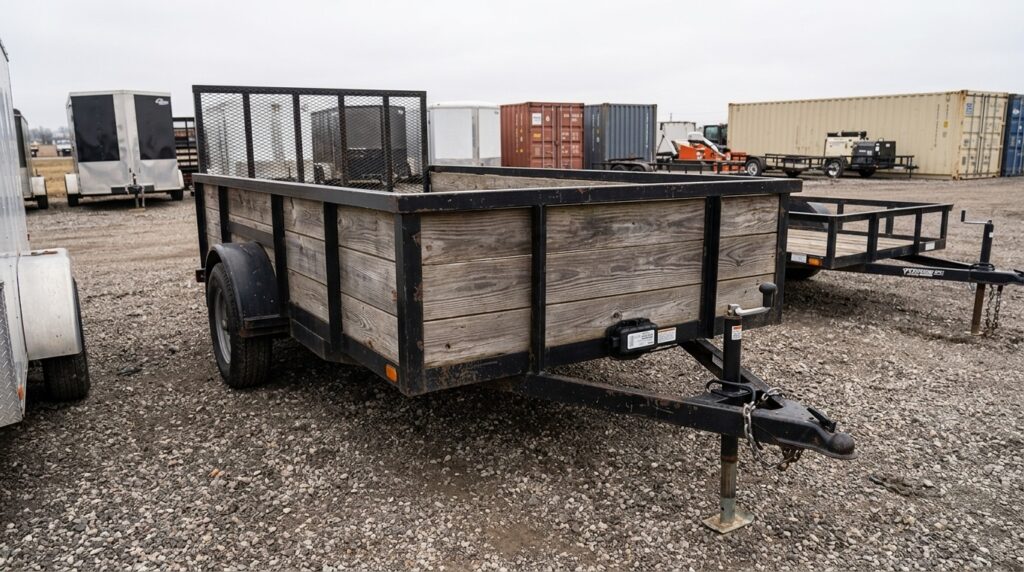
Plenty of operators run an ELD for compliance and a separate GPS tracker for added coverage. A tracker on the trailer adds theft protection that an in-cab ELD does not provide, since trailers are often detached from the truck. A tracker on exempt or non-driving assets keeps visibility across the whole fleet without paying for ELD features you do not need. Some all-in-one platforms combine both functions under a single subscription, which can simplify billing, though you should confirm that the ELD portion is properly registered.
❓ Frequently Asked Questions
Can a regular GPS tracker replace an ELD?
No, not unless it is a registered ELD that meets the federal standards. A standard tracker does not satisfy the hours-of-service requirement.
Can an ELD replace a GPS tracker for theft protection?
Partly. An ELD reports vehicle location, but it is built around logging hours, not around theft alerts, motion detection on detached trailers, or long-standby tracking.
Which one should a small fleet buy first?
If your drivers are subject to hours-of-service rules, the ELD comes first because it is a legal requirement. After that, add trackers where theft or visibility is the concern.
🔗 Related Reading
For an overview aimed at smaller operations, see GPS Tracker for Small Business Fleets: A Practical Guide. To protect detached equipment, read GPS Tracker for Trailers: A Practical Guide. For a closer look at ongoing costs, see GPS Tracker Subscription Plans Explained, and for hardware picks, the Best GPS Tracker for Semi Trucks guide covers commercial options. For the official rules and the registered device list, visit the FMCSA electronic logging device page.
✅ Final Thoughts
A GPS tracker and an ELD solve different problems. The ELD keeps you compliant with hours-of-service rules, while the tracker protects and monitors your assets. Work out which rules apply to your operation first, then add trackers wherever theft risk or visibility matters most.
🚛 Protect Your Fleet Beyond the Cab
Explore GPS trackers built for trailers, equipment, and commercial vehicles.