


My Car Was Stolen: What to Do Right Now
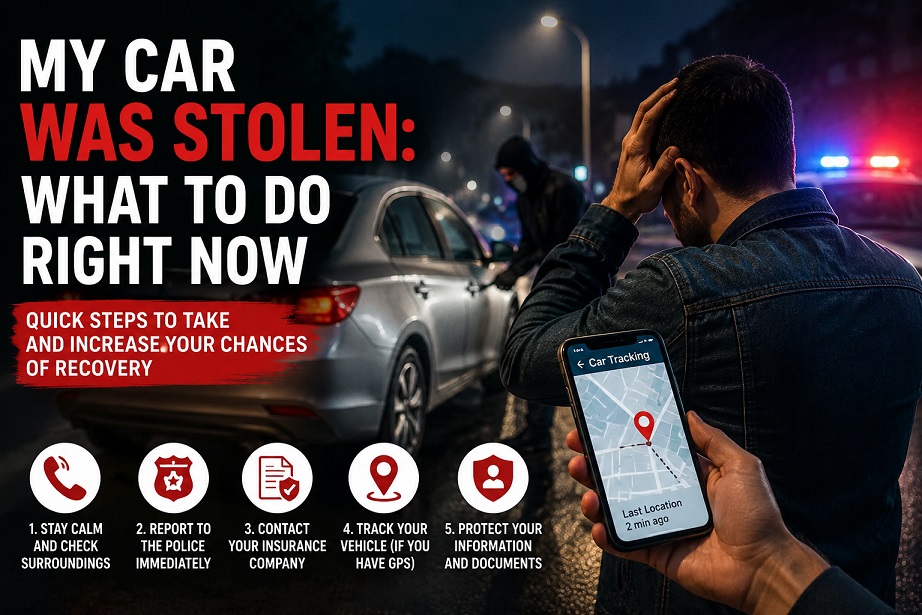
My Car Was Stolen: What to Do Right Now
A calm, step-by-step guide to recovering your vehicle using GPS tracking data and working effectively with police.
Discovering your vehicle is missing is genuinely stressful, and it's easy to either freeze or rush into something unsafe. This guide walks through exactly what to do, in order, whether or not you have a GPS tracker installed — and explains specifically how tracking data can speed up recovery when it's available.
🚨 Step-by-Step: What to Do Immediately
1. Confirm it's actually been stolen
Before assuming theft, quickly rule out simpler explanations — check if it was towed for a parking violation, moved by a family member, or repossessed, since these situations require a different response than a genuine theft.
2. Open your GPS tracker app immediately, if installed
Check the last known and current location right away. Take a screenshot of the location and timestamp, since this becomes valuable evidence to share with police as soon as possible.
3. Call the police and file a report
Report the theft as soon as possible, providing the vehicle's details, last known location, and — critically — any live GPS tracking data you have. Ask directly whether they can act on real-time location information, since response protocols vary.
4. Do not personally pursue or confront anyone
Even with a live location visible on your tracker, avoid approaching the vehicle or any individuals near it yourself. Share the location with police and let trained professionals handle the actual recovery for your own safety.
5. Notify your insurance provider
Report the theft to your insurer promptly, since most policies have specific reporting timeframes, and provide them with the police report reference number along with any GPS tracking evidence you've gathered.
6. Continue monitoring the tracker, but stay at a safe distance
If the vehicle continues moving, keep noting locations and times to share as updates with police, but resist any urge to follow the vehicle yourself.
7. If your tracker supports remote engine cut-off, coordinate its use with police
Triggering immobilization without police awareness can be risky if it happens in traffic or an unpredictable location — ideally, use this feature only once you know police are nearby and can respond safely.
📍 Why GPS Tracking Data Speeds Up Recovery
Vehicle theft investigations without any tracking data typically rely on witness reports, security camera footage from nearby businesses, and general area canvassing — all of which take time and don't guarantee a specific location. GPS tracking data changes this significantly by giving police a concrete, real-time or recent location to act on directly, rather than needing to piece together where a vehicle might have gone.
📋 What to Have Ready When You Call Police
| Information | Why It Helps |
|---|---|
| Vehicle make, model, color, plate number | Basic identification for any responding officer or patrol |
| Last confirmed location and time | Establishes an accurate starting point for the investigation |
| Live GPS tracker screenshot or app access | Gives police something concrete and immediate to act on |
| Any distinguishing features or contents | Helps confirm positive identification once located |
| Insurance policy number | Streamlines the parallel insurance claim process |
🚫 What Not to Do
- Don't chase the vehicle yourself — this creates real safety risk for you and anyone nearby, and can complicate the police response.
- Don't confront anyone near the tracked location — let police make that determination and approach safely with proper training and authority.
- Don't delay filing the police report — waiting reduces the window in which tracking data remains most useful and can complicate insurance claims later.
- Don't assume the tracker alone guarantees recovery — it significantly improves the odds, but successful recovery still depends on police response and specific circumstances.
🔧 If You Don't Currently Have a GPS Tracker
If this experience is prompting you to consider installing tracking for the future, prioritize a device with real-time alerts and a backup battery, since these two features matter most for exactly this scenario — catching the theft attempt early through instant movement alerts, and maintaining location visibility even if a thief disconnects the vehicle's main power source, which is often one of the first things attempted.
❓ Frequently Asked Questions
How long do police typically take to respond to a vehicle theft with GPS location data?
Response times vary considerably based on location, current police workload, and specific jurisdiction, so it's not possible to give a universal timeframe. What's consistent is that providing clear, specific location data generally allows for a faster, more targeted response compared to a report with no location information at all.
Should I keep tracking the vehicle's movement after filing the police report?
Yes — continuing to monitor and share updated location information with police, without approaching the vehicle yourself, remains valuable throughout the investigation, since the vehicle's location may continue changing after your initial report.
Will my insurance claim be affected if I don't have tracking data to provide?
A stolen vehicle claim can still proceed without GPS data, based on the police report and standard investigation process, though tracking data can sometimes help support and speed up the claims process by providing additional documented evidence of the theft and recovery attempt.
🏢 For Fleet and Business Vehicles
If the stolen vehicle is part of a business fleet rather than a personal car, a few additional steps are worth adding to the process above. Notify your fleet manager or relevant internal team immediately alongside the police report, since business insurance and operational continuity considerations differ somewhat from personal vehicle claims. If the vehicle was carrying business equipment, cargo, or client property, document this separately for both the police report and insurance claim, since these additional losses need to be reported distinctly from the vehicle theft itself.
For businesses managing multiple vehicles, having a pre-established internal protocol for exactly this scenario — who to notify first, which tracking dashboard to check, and who has authority to coordinate with police — removes decision-making friction during an already stressful moment. Reviewing and confirming this protocol periodically, rather than assuming it will simply work out when needed, is a worthwhile investment for any business operating more than a handful of vehicles.
✅ Final Thoughts
Discovering a stolen vehicle is stressful, but a clear, methodical response genuinely improves recovery odds — confirm the situation, check tracking data if available, report to police immediately with specific location information, and resist any urge to personally intervene. If this experience highlights a gap in your current setup, prioritizing real-time tracking with backup power for the future is one of the most direct ways to improve your odds if it ever happens again.
📍 Prepare for the Unexpected
Explore GPS tracker models with real-time alerts and backup battery protection, built to support fast recovery when it matters most.
One thought on “My Car Was Stolen: What to Do Right Now”