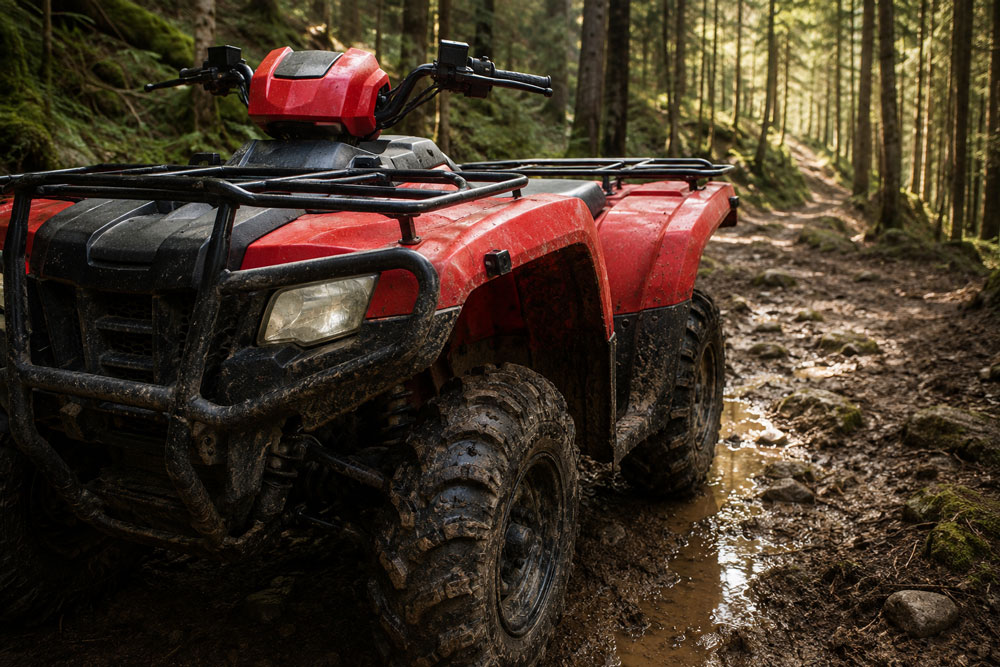


Best GPS Tracker for Desert & Off-Road Driving in UAE & Saudi Arabia
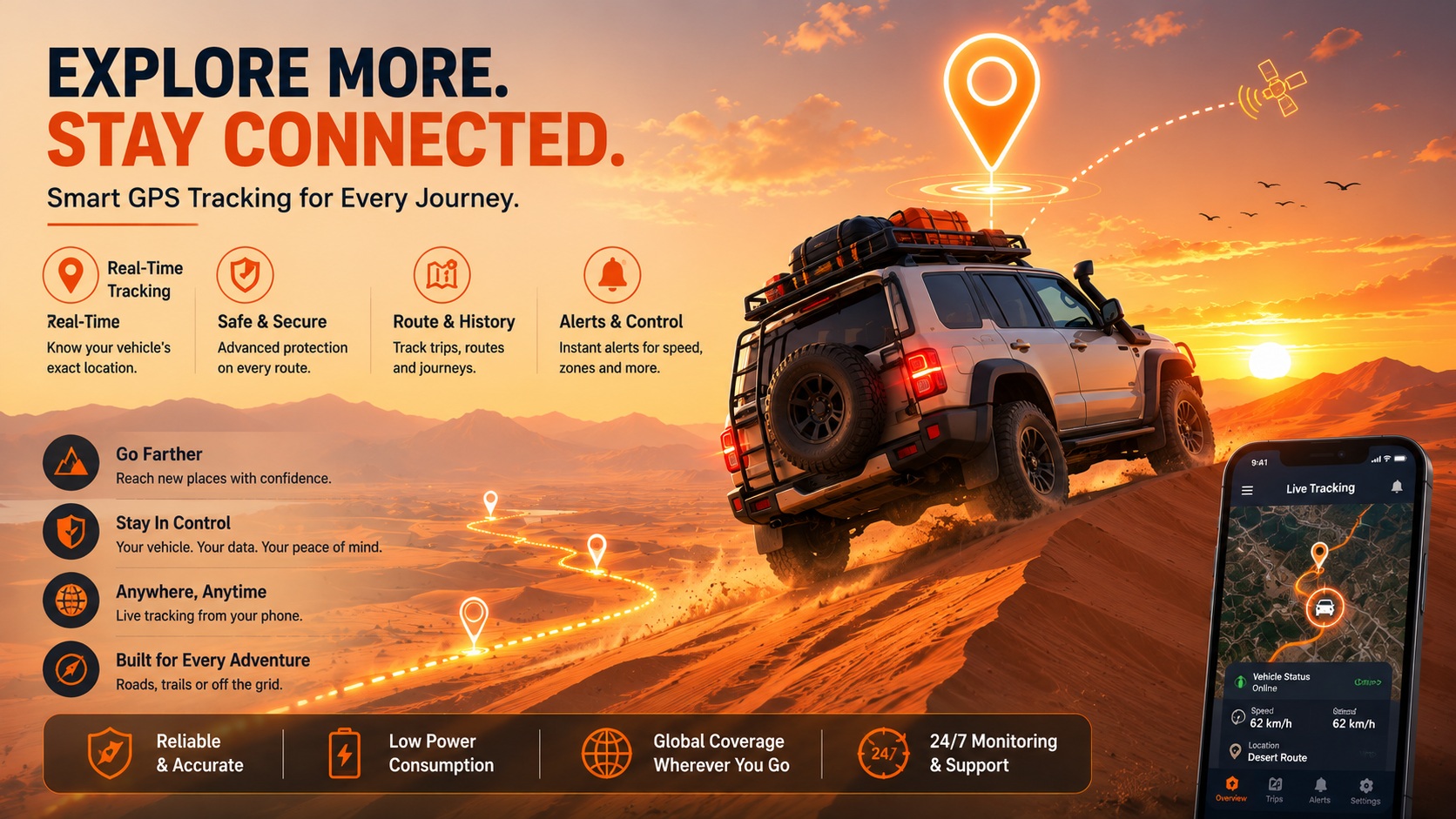
Best GPS Tracker for Desert & Off-Road Driving in UAE & Saudi Arabia
Desert safaris, dune bashing, and remote off-road trips push a GPS tracker far harder than daily city driving ever will. Here's what actually holds up.
Desert driving is practically a national pastime across the UAE and Saudi Arabia, from weekend dune bashing outside Dubai to long desert crossings in Saudi's Empty Quarter. But the conditions that make these trips exciting — extreme heat, soft sand, and total isolation from cell towers — are exactly the conditions where a standard city-focused GPS tracker starts to fail. This guide covers what actually matters when choosing one for genuine desert and off-road use.
🌡️ Why City Trackers Struggle in Desert Conditions
Most consumer GPS trackers are designed and tested for everyday urban use — moderate temperatures, consistent cellular coverage, and paved-road vibration levels. Desert and off-road conditions challenge all three of these assumptions at once, which is why a tracker that works perfectly for a daily commute in Dubai can behave very differently on a weekend trip into the dunes.
Extreme Heat
Dashboard and engine bay temperatures during Gulf summers can far exceed what many consumer electronics are rated to handle reliably.
Signal Gaps
Remote desert areas often have limited or no cellular coverage, interrupting real-time reporting exactly when it matters most.
Sand & Vibration
Constant fine sand exposure and heavy off-road vibration can damage devices not built with proper sealing and mounting.
🔑 Features to Prioritize for Desert & Off-Road Use
🚙 Vehicle-Specific Considerations
Off-road and desert vehicles often differ mechanically from standard city cars in ways that affect tracker installation and reliability. Modified 4x4s with aftermarket electrical systems, raised suspension, or additional battery setups need a technician familiar with these modifications to install a wired tracker correctly, since a standard installation approach designed for an unmodified sedan may not translate directly.
Vibration from sustained off-road driving is also considerably higher than typical city or highway driving, which makes secure mounting — not just placement, but genuinely firm physical mounting — more important than it would be for a car that mostly sees paved roads. A tracker that works fine loosely tucked under a seat in daily city driving can shift or disconnect during heavy desert terrain if not properly secured.
📊 City Tracker vs Desert-Rated Tracker
| Factor | Standard City Tracker | Desert-Rated Tracker |
|---|---|---|
| Operating Temperature | Rated for typical urban conditions | Rated for sustained extreme heat exposure |
| Dust/Sand Resistance | Basic or no sealing rating | IP65+ sealed enclosure |
| Offline Coverage | Relies on continuous cellular signal | Stores data locally when signal drops |
| Mounting | Standard placement, lower vibration tolerance | Reinforced mounting for high-vibration terrain |
| Emergency Backup | None beyond standard alerts | Satellite messaging option on advanced models |
🛠️ Setting Up Tracking for a Desert Trip
🚫 Common Mistakes on Desert & Off-Road Trips
Remote desert areas frequently lose cellular coverage entirely for extended stretches.
Fine desert sand finds its way into poorly sealed electronics surprisingly easily.
Heavy off-road vibration can dislodge a device that isn't firmly secured.
Relying solely on real-time tracking with no local logging leaves gaps exactly when it matters.
🐫 Desert Safari Operators and Tour Companies
For businesses running organized desert safaris or off-road tours across the UAE and Saudi Arabia, fleet-wide tracking with offline logging becomes an operational safety requirement rather than just a convenience. Being able to confirm every vehicle's last known position before entering a signal-dead zone, and quickly retrieving their logged route once they're back in coverage, matters both for guest safety and for coordinating rescue or assistance if a vehicle breaks down in a remote area.
Tour operators should specifically prioritize devices with proven offline logging reliability and consider satellite backup options for routes that regularly go far outside cellular coverage, since the cost of that added reliability is generally minor compared to the operational and safety value it provides for a business built around guiding groups through remote terrain.
❓ Frequently Asked Questions
Do I need a special tracker just for occasional desert weekends?
Not necessarily. If desert or off-road driving is only an occasional weekend activity rather than a regular pattern, a well-built standard tracker with reasonable build quality will likely handle it fine. The desert-specific features become genuinely important for frequent off-roaders, long remote trips, or anyone whose vehicle spends extended time in extreme heat or dusty conditions on a regular basis.
How does extreme heat actually damage a GPS tracker?
Sustained high temperatures can degrade internal battery cells faster than normal, cause certain electronic components to fail prematurely, and in some cases trigger automatic thermal shutdown in devices not rated for the exposure. This is why checking a device's stated operating temperature range matters more in the Gulf than it might in a milder climate — a tracker technically working elsewhere in the world may still struggle with a Gulf summer specifically.
What should I do if my tracker loses signal completely during a desert trip?
If your device supports offline logging, it should continue recording location data locally and sync automatically once signal returns, so there's often no need to do anything beyond continuing your trip normally. If your tracker doesn't have this capability, informing a trusted contact of your planned route beforehand becomes an important manual backup, since you won't have real-time visibility during the signal gap.
Can I use the same tracker for both city driving and desert trips?
Yes, in most cases a single well-rated tracker can handle both use cases — the features that help in the desert, like heat resistance and offline logging, don't create any downside for everyday city use. This makes a desert-rated tracker a reasonable default choice if you split your driving between urban and off-road conditions, rather than needing two separate devices.
✅ Final Thoughts
Desert and off-road driving across the UAE and Saudi Arabia pushes GPS tracking technology well beyond what typical city use demands — extreme heat, sand exposure, heavy vibration, and genuine signal gaps all need to be accounted for. If your driving stays mostly urban with the occasional desert weekend, a well-built standard tracker is likely sufficient. But for frequent off-roaders, desert tour operators, or anyone planning genuinely remote trips, investing in a properly rated, securely mounted tracker with offline logging isn't overkill — it's the difference between reliable protection and a device that quietly stops working exactly when you need it most.
🏜️ Gear Up for Your Next Desert Trip
Explore GPS tracker models built to handle heat, dust, and remote terrain — ready for real desert and off-road conditions.