


GPS Tracker Accessories Guide: SIM Cards, Mounts, Cases & Power Banks
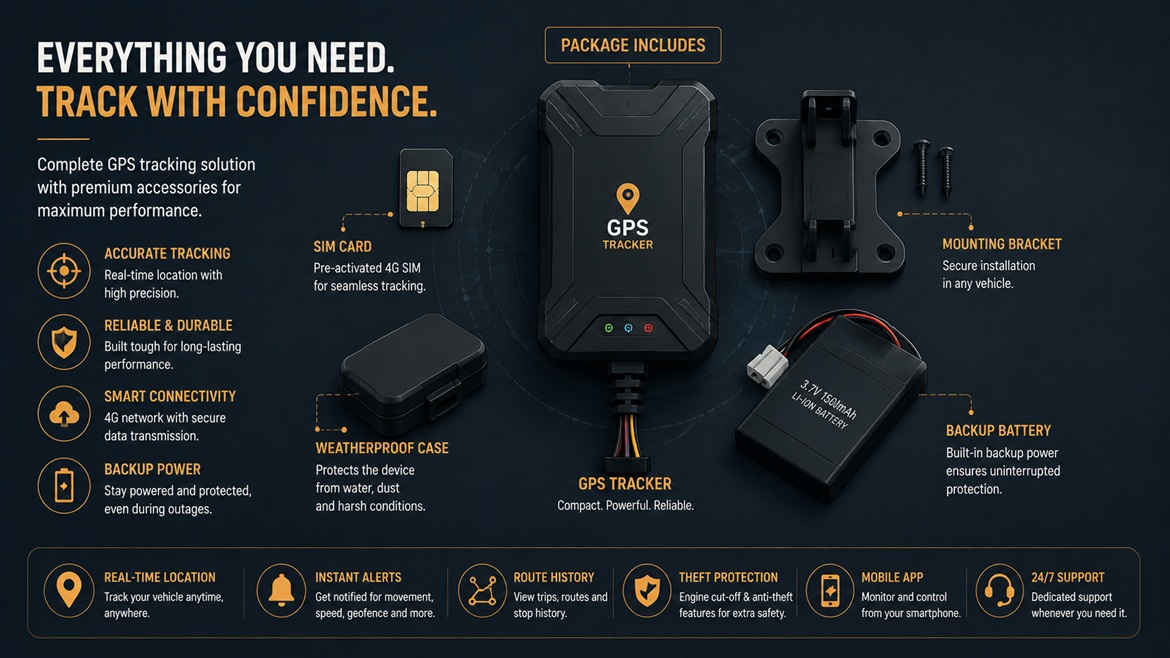
GPS Tracker Accessories: What You Actually Need
The device itself is only half the setup — the right SIM card, mount, case, and backup power source often determine whether your tracker performs when it matters.
Most people buying their first GPS tracker focus entirely on the device itself and overlook the accessories that actually determine how well it performs day to day. A great tracker with the wrong SIM plan, a flimsy mount, or no weatherproofing can underperform badly compared to a modest device paired with the right supporting gear. This guide covers the accessories genuinely worth considering — and a few that are often oversold.
🧩 The Core Accessory Categories
SIM Cards & Data Plans
The connection that actually gets location data from the device to your phone — arguably the most important "accessory" of all.
Mounts & Installation Kits
Secure physical attachment matters as much as the device's own features, especially for vehicles facing vibration or rough terrain.
Weatherproof Cases
Protection against moisture, dust, and temperature extremes — essential for anything mounted outdoors or exposed to the elements.
Backup Power & Batteries
Keeps a tracker reporting even after main power is cut or a battery runs low at the worst possible moment.
📶 SIM Cards and Data Plans
Nearly every real-time GPS tracker depends on a cellular connection, which means the SIM card and data plan behind it matters just as much as the device hardware. Some trackers come with a bundled SIM and subscription included in the purchase price, while others require you to source your own SIM card and manage a separate data plan directly with a carrier.
🔧 Mounts and Installation Kits
How securely a tracker is physically attached directly affects both its reliability and how well it stays hidden. A tracker resting loosely under a seat can shift or disconnect during rough driving, while a properly mounted unit — whether via adhesive pads, a wiring harness clip, or a dedicated bracket — stays in place and maintains consistent GPS signal reception.
🌧️ Weatherproof Cases
Any tracker mounted outdoors, on a motorcycle, or on equipment exposed to the elements benefits significantly from proper weatherproofing, even if the device itself claims some baseline water or dust resistance. An IP-rated protective case adds a meaningful extra layer of protection against rain, dust, and temperature extremes — particularly relevant across the Gulf's intense summer heat or Bangladesh's monsoon season, where consumer electronics face genuinely harsh conditions well beyond typical indoor use.
| Accessory | Most Useful For |
|---|---|
| IP65+ Weatherproof Case | Motorcycles, outdoor equipment, exposed mounting locations |
| Heat-Resistant Housing | Vehicles parked in direct sun during Gulf summers |
| Dust-Sealed Enclosure | Desert and off-road use, construction sites |
| Basic Splash Protection | Everyday city vehicles with mostly indoor/garage parking |
🔋 Backup Power and Batteries
A tracker's single point of failure is often power. If a device relies entirely on the vehicle's main electrical system with no internal backup, cutting that main wire — often the very first thing a thief does — silences the tracker completely at the exact moment it matters most. A backup battery, even a modest one offering just a few hours of standalone operation, dramatically improves reliability during an actual theft attempt.
🚫 Accessory Mistakes to Avoid
Assuming the device alone is weather-resistant enough often leads to premature failure.
A great tracker is useless if the SIM has poor signal exactly where you need it most.
A loose or improvised mount increases both signal issues and visibility to a potential thief.
Many buyers only discover the lack of backup power after an actual theft attempt.
🛍️ Building a Complete Setup
Rather than treating accessories as optional add-ons, it's worth thinking of a GPS tracker purchase as a small system: the device itself, a reliable SIM and data plan, a secure mount appropriate to your installation type, weatherproofing suited to your climate and exposure, and backup power if theft protection is a priority. Buying all of these together, ideally from a provider who can confirm compatibility across the full set, avoids the common problem of ending up with mismatched components that don't work well together or leave an obvious gap in protection.
❓ Frequently Asked Questions
Do I need to buy a separate SIM card, or does the tracker come with one?
This varies by provider and product line — some GPS trackers ship with a bundled SIM and subscription already included, while others are sold as bare hardware requiring you to source connectivity separately. Always confirm this before purchase, since the ongoing cost and setup complexity differ significantly between the two approaches.
Can I use any SIM card, or does it need to be a specific type?
Many trackers require a standard-size SIM compatible with the device's cellular module, and some are locked to specific carriers or require an IoT-specific data plan rather than a regular consumer mobile plan. Checking the device's SIM requirements before buying a card separately avoids the frustration of purchasing an incompatible one.
Is a weatherproof case really necessary if my tracker is installed inside the vehicle?
For trackers mounted in genuinely protected interior locations, like inside a dashboard or under a seat, a dedicated weatherproof case is less critical, though heat resistance still matters given how hot vehicle interiors get during Gulf summers. For anything mounted outdoors, on a motorcycle, or exposed to weather at all, a proper case moves from optional to genuinely important.
How often should I replace or check the backup battery?
This depends on the specific device, but as a general habit, testing backup battery function every few months — by briefly disconnecting main power and confirming the tracker still reports — helps catch a failing backup battery before you actually need to rely on it in an emergency, rather than discovering the issue too late.
🧰 A Simple Starter Checklist
If you're putting together a first-time GPS tracker setup and want a straightforward starting point, a reasonable minimum includes: the tracker device itself matched to your specific use case, a confirmed-working SIM with adequate coverage in your area, a mount appropriate to your installation type, and — if theft protection or long-term reliability matters — a backup battery option. Weatherproofing beyond the device's base rating is worth adding for anything mounted outdoors or exposed to a harsh climate, while indoor or well-protected installations can often skip this step without much added risk.
Working through this list before purchase, rather than discovering gaps after installation, tends to save both money and frustration — it's considerably easier to buy the right combination upfront than to retrofit missing accessories onto a tracker that's already installed and in use.
✅ Final Thoughts
The tracker itself gets most of the attention, but the accessories around it — SIM connectivity, secure mounting, weatherproofing, and backup power — are often what actually determine whether a tracking setup performs reliably in real-world conditions. Before buying, take a moment to think through your specific use case and climate, and make sure the accessories match, rather than assuming the base device alone will be enough.
🛒 Complete Your Tracker Setup
Browse SIM plans, mounts, weatherproof cases, and backup batteries designed to work seamlessly with your GPS tracker.