

GPS Tracker for Insurance Telematics – Save Up to 40% on Car Insurance
GPS Tracker for Insurance Telematics – Save Up to 40% on Car Insurance
By MotoTechGPS Editorial Team | Updated: July | 11 min read
Car insurance is one of the biggest fixed costs for most drivers — often $1,200 to $2,400 per year in the US, and even higher for young drivers in the UK. Traditional insurers set premiums based on broad demographics: your age, postcode, car model, and claims history. They rarely know whether you actually drive safely or not.
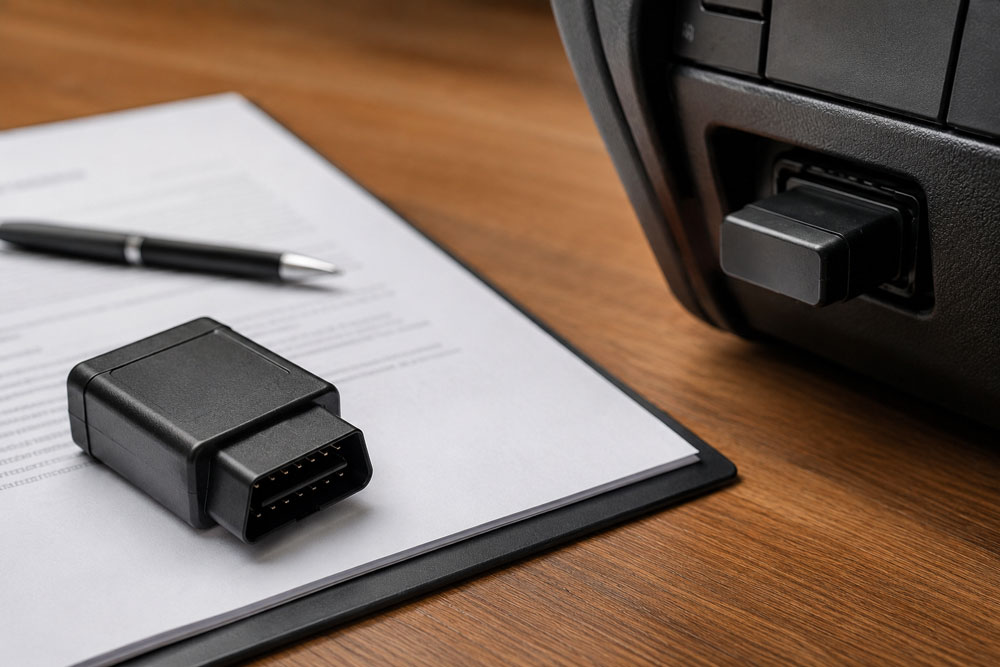
Insurance telematics changes that. A small GPS device — either plugged into your OBD-II port or installed by your insurer — monitors your actual driving behaviour and sends the data to your insurance company. Drive safely, get rewarded. Here's everything you need to know.
How Much Can You Actually Save?
Maximum discount offered by leading telematics programmes
Average saving for enrolled drivers in US UBI programmes
Estimated annual saving for a safe driver on a $1,600 premium
Young UK drivers saving on black box insurance vs standard policies
What Is Insurance Telematics? (Simple Explanation)
Insurance telematics — also called usage-based insurance (UBI) or black box insurance — is a system where a GPS and accelerometer device monitors your driving and sends real data to your insurer. Instead of paying a fixed premium based on statistics, your premium reflects how you actually drive.
Think of it this way: if you drive 4,000 miles a year, always before midnight, never brake hard, and never speed — why should you pay the same as someone who drives 20,000 miles a year and accelerates aggressively? Telematics solves this unfairness with data.
How GPS Insurance Telematics Works — Step by Step
Enrol in a telematics programme
Sign up through your insurer's telematics programme (Progressive Snapshot, State Farm Drive Safe & Save, Allstate Drivewise, etc.) or switch to a telematics-first insurer like Root Insurance.
Receive or install your telematics device
Your insurer sends a plug-in OBD-II dongle by post, or you download their smartphone app. Some UK insurers send a technician to professionally install a black box. Installation takes 30 seconds to 30 minutes depending on the type.
The device monitors your driving
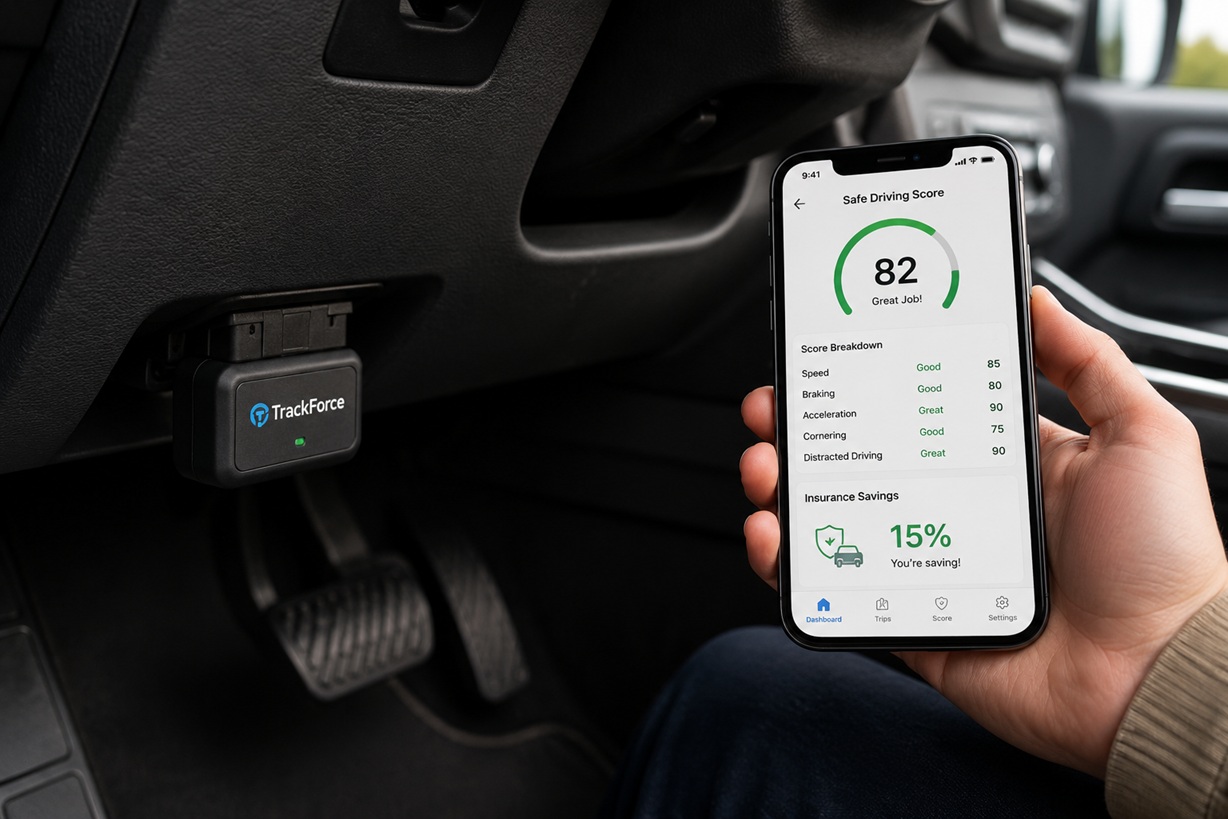
Every trip is recorded. The device tracks speed, acceleration, braking, cornering, time of day, and miles driven. Some programmes also use your phone's camera to detect phone use while driving.
Data is sent to your insurer's platform
Via cellular or Bluetooth + smartphone, driving data is transmitted to your insurer's cloud system. You can usually view your own driving score in real time through the insurer's app.
Your discount is calculated and applied
After a monitoring period (typically 30–90 days), your insurer calculates your discount based on your driving score and applies it to your premium — either immediately or at renewal.
What Data Does a Telematics GPS Device Collect?
Miles Driven
Low-mileage drivers pay less — driving fewer miles means less exposure to accident risk.
Time of Day
Night driving (11pm–5am) is considered higher risk. Daytime drivers score better.
Hard Braking
Sudden braking events indicate aggressive or distracted driving — the biggest scoring factor.
Speed & Acceleration
Speeding and rapid acceleration patterns are flagged as high-risk driving behaviours.
Cornering
Sharp cornering at speed indicates aggressive driving — monitored by the accelerometer.
Phone Distraction
Some advanced programmes detect phone handling while driving using motion and app sensors.
Best Insurance Telematics Programmes in
| Programme | Country | Device Type | Max Discount | Can Premium Rise? |
|---|---|---|---|---|
| Progressive Snapshot Most Popular US | 🇺🇸 US | OBD-II plug-in | Up to 30% | Yes (up to 5%) |
| State Farm Drive Safe & Save | 🇺🇸 US | App / OnStar | Up to 30% | No |
| Allstate Drivewise | 🇺🇸 US | App-based | Up to 40% | No |
| Root Insurance | 🇺🇸 US | App-based | Based on score | N/A (score sets price) |
| Admiral LittleBox Best UK Young Drivers | 🇬🇧 UK | Black box installed | Up to 50% | Yes (if driving worsens) |
| Marmalade Black Box | 🇬🇧 UK | Black box installed | Up to 40% | Yes |
| Aviva Drive | 🇬🇧 UK | App-based | Up to 20% | No |
US vs UK Telematics — Key Differences
🇺🇸 United States
- Mostly OBD-II plug-in dongles or app-based
- Discounts applied at renewal or mid-term
- Major programmes: Progressive, State Farm, Allstate, Root
- Average saving: 15–25% for safe drivers
- Some programmes share data with other insurers
- Most popular with middle-aged, low-mileage drivers
🇬🇧 United Kingdom
- Traditional black box professionally installed in car
- Huge savings for young drivers (17–25) — often 30–50%
- Major programmes: Admiral, Marmalade, Hastings, Aviva
- Some policies include curfew restrictions (e.g. no driving after midnight)
- Premium can increase if driving score deteriorates
- Standard for new drivers — often the only affordable option
How Your Driving Score Is Calculated
| Driving Behaviour | Score Impact | What Insurers Look For |
|---|---|---|
| Smooth braking | Very Positive ✅ | No sudden braking events above 0.4g deceleration |
| Gentle acceleration | Positive ✅ | Acceleration below 0.35g — no jackrabbit starts |
| Driving under speed limits | Very Positive ✅ | Consistent compliance with posted limits |
| Daytime driving only | Positive ✅ | Avoiding 11pm–5am high-risk hours |
| Low annual mileage | Positive ✅ | Under 7,500 miles/year is ideal |
| Hard braking events | Very Negative ❌ | The single biggest negative scoring factor |
| Late-night driving | Negative ❌ | Midnight to 5am trips hurt your score significantly |
| Speeding | Very Negative ❌ | Any sustained driving above posted limits |
| Sharp cornering | Moderate Impact ⚡ | High-G lateral forces flagged as aggressive |
| Phone use while driving | Very Negative ❌ | Detected via motion patterns on app-based programmes |
💡 Pro Tip: The single most impactful thing you can do to improve your telematics score is eliminate hard braking. Leave more following distance, anticipate traffic lights changing, and slow down earlier. Studies show this one change can improve scores by 15–20 points on most platforms.
Telematics GPS vs Your Own Third-Party GPS Tracker
You might wonder — can I use my own GPS tracker (like a Bouncie or LandAirSea 54) to prove safe driving to my insurer and get a discount? The short answer is no, not directly. Insurers only accept data from their own approved telematics devices or apps — they can't accept data from third-party trackers.
However, owning your own GPS tracker alongside an insurer telematics programme has real benefits:
- Theft recovery: If your car is stolen, your personal GPS tracker provides real-time location even if the insurer's device is disabled.
- Driver coaching: Use a personal tracker's driving reports to identify and fix bad habits before your telematics score is assessed.
- Dispute resolution: Your own tracker's data can serve as independent evidence in accident claims where fault is disputed.
- Fleet insurance: For business vehicles, third-party GPS fleet trackers like Samsara and Bouncie generate driver behaviour reports that some commercial insurers will accept for premium negotiations.
⚠️ Warning: Some telematics programmes — particularly Progressive Snapshot — can slightly increase your premium (up to 5%) if your driving score is poor. Always read the programme terms before enrolling. If you know you have some bad driving habits, consider using a third-party tracker to improve first, then enrol in the telematics programme once your driving is cleaner.
Who Benefits Most from Insurance Telematics?
- Young drivers (17–25): The biggest beneficiaries. Young drivers typically pay the highest premiums. A black box telematics policy in the UK can save £500–£1,500 vs a standard policy.
- Low-mileage drivers: If you drive under 7,500 miles/year — working from home, retired, or city-based — telematics rewards you heavily compared to high-mileage drivers.
- Safe, experienced drivers: Drivers with clean records who already drive smoothly can capture significant discounts by simply proving their habits with data.
- Drivers with past claims: If you've had claims that raised your premium, telematics can help rebuild your profile and demonstrate improved driving.
How to Maximise Your Telematics Discount — 8 Proven Tips
- 1. Increase following distance: More space = smoother braking = better score. Aim for at least 3 seconds behind the car in front.
- 2. Anticipate traffic lights: Lift off the accelerator early when you see a red light ahead. Let the car coast instead of braking hard at the last moment.
- 3. Avoid rush hour driving: Stop-start traffic causes hard braking. If you can shift your commute by 30 minutes, your score will thank you.
- 4. Avoid late-night driving: 11pm–5am trips hurt your score in nearly every programme. Plan late nights carefully during your monitoring period.
- 5. Reduce motorway speeding: Even modest speeding (5–10mph over limit) is detected and will cost you discount points.
- 6. Don't use your phone while driving: App-based programmes detect phone handling. Put it on Do Not Disturb and use a mount.
- 7. Monitor your score weekly: Check the insurer's app regularly. Most show you which specific events hurt your score so you can correct them.
- 8. Drive during the monitoring period, then claim discount: Some programmes base the discount on the first 30–90 days. Drive your best during that window.
Frequently Asked Questions
Final Verdict
GPS insurance telematics is one of the smartest financial moves a safe driver can make in. If you already drive smoothly, stay within speed limits, and avoid late-night trips — you are almost certainly overpaying for car insurance right now.
In the US, start with Allstate Drivewise (up to 40% discount, premium cannot rise) or State Farm Drive Safe & Save (up to 30%, no penalty for poor scores). In the UK, young drivers should look at Admiral LittleBox or Marmalade for the biggest premium reductions.
Use the 8 tips in this guide during your monitoring period, focus especially on eliminating hard braking, and you should comfortably achieve a 20–30% discount on your next renewal.
🛰️ Want a GPS tracker that also monitors your own driving behaviour?
MotoTechGPS stocks OBD-II GPS trackers with built-in driver behaviour reporting — see your speed, braking, and trip history before your insurer does.